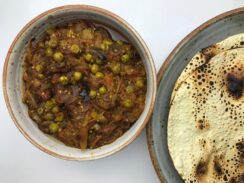
Vegan Sarson Ka Saag (Mustard Greens and Spinach Saag)
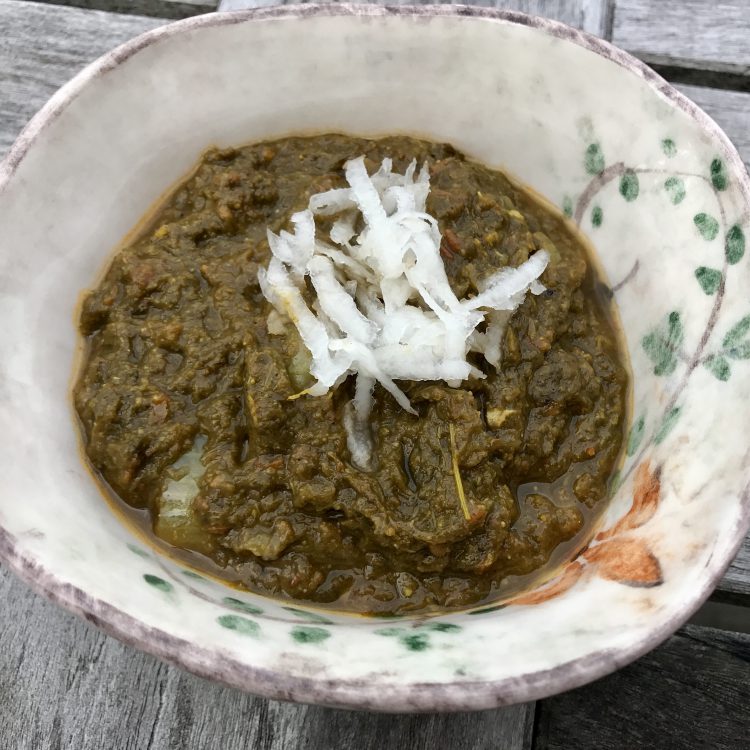
“Saag” means “pureed greens” in Punjabi. I grew up eating mustard greens and spinach saag, which is usually loaded with “ghee” (butter), so when I switched my diet, I had to come up with a vegan version without compromising the taste or texture of my family’s recipe. My kids love my saag recipe, especially in the winter when we want our greens but don’t want to eat a cold salad. This vegan sarson ka saag, otherwise known as mustard greens and spinach saag, is great by itself, but I like to serve it with naan or my flatbread.
Sarson, otherwise known as mustard greens, have large, broad leaves with fibrous stems. Its flavor is sharp, peppery, and slightly bitter. Fresh mustard leaves are available in winter, so in North India, sarson ka saag is a winter dish.
Meanwhile, palak, otherwise known as spinach, has smaller, smooth, flat, dark green leaves with thin, tender stems. Its flavor is mild, earthy, and slightly sweet, and spinach is grown and available year-round.
In this recipe, I use half spinach and half mustard greens to balance out the bitter flavors. I also add a slurry (paste) of cornmeal to cut through the bitterness of mustard greens. There are no substitutes for these ingredients in this recipe.
While you might want to add sugar to alleviate some of the bitterness, if you add sugar, it will make the dish sweet but not cut the bitterness of the mustard greens. Instead, if you find your saag to be bitter, you can add more pureed spinach and cornmeal paste to bring the dish into balance rather than adding sugar.
My History With Sarson Ka Saag
Winter in Delhi arrives quietly and quickly. In our house, as a young girl, I knew that winter had arrived when the vegetable vendors started selling the ingredients to make sarson ka saag. Making saag is quite a project, as it involves cleaning and chopping the saag and bhatua (available in Delhi in winter). The chopping took forever. The cooking took even longer.
The greens went into a big pressure cooker with ginger, garlic, and green chilies. Then came the part I loved most. The whole house filled with that earthy, peppery smell that was sharp from the mustard and mellow from the spinach. It clung to our sweaters for days.
A spoonful of makki ka atta (corn meal) went in to thicken it. Then the saag simmered low, bubbling and spitting, while it was stirred and tasted, and stirred again.
Today, I make saag in a different kitchen, in a different country, although I can’t always find fresh mustard greens. Saag means winter to me, so I make it only in winter. Check out my other easy Indian recipes if you want to make more Indian food at home.
How This Vegan Version Works Without Ghee
Ghee traditionally adds richness to sarson ka saag and helps it develop a creamy texture. However, for a vegan alternative, I find that grapeseed oil and a slurry of cornmeal and water are a great substitute for ghee. The oil adds the rich flavor that ghee normally would, while the cornmeal and water help thicken the mixture, adding creaminess.
What is Sarson Ka Saag?
Sarson ka saag is a Punjabi greens dish containing mustard greens, spinach, garlic, ginger, and several warming Indian spices like cumin, coriander, turmeric, and garam masala. My version also includes broccoli, which is less traditional in this dish but is so delicious when blended with the more bitter mustard greens and earthy spinach. Saag and makki ki roti are a signature pairing in Punjabi cuisine and are so comforting during the winter season.
The word “sarson” means “mustard,” which makes sense since sarson ka saag is slow-cooked mustard greens that usually includes spinach as well. A dish commonly enjoyed in Punjab during winter, it is traditionally eaten with makki ki roti (corn flatbread).
This mustard greens recipe is similar to other Indian greens dishes like palak saag or palak paneer, but there are some key differences. While sarson ka saag is a spiced mustard greens and spinach dish that is almost a puree consistency, palak saag primarily includes mature spinach leaves, whereas palak paneer includes both spinach and paneer. Palak paneer is the more well-known cousin of sarson ka saag, but greens are at the center of both dishes. For my take on saag in pizza form, you may love my Saag & Corn Pizza for a delicious dinner.
Ingredient Notes
- Mustard greens and spinach: “Sarson” or “sarso” means “mustard greens” and “palak” means “spinach.” They are both leafy greens used in North Indian cooking, and they have different flavors. These greens form the base of the dish, whereas the mustard gives it a peppery bite. I add spinach to the saag to tame the bitterness of the mustard greens.
- Broccoli: While untraditional in this dish, it adds extra earthiness and body to the greens mixture. I also like to add it to help balance out the bitter taste in the mustard greens.
- Cornmeal: This acts as a thickener and stands in for makki ka atta, a type of corn flour. Some recipes use besan or rice flour as alternatives for thickening instead.
- Grated daikon or radish garnish: This is a nod to the mooli that is traditionally served alongside the mustard greens and spinach saag. I love to serve saag with radish/daikon radish. Saag is soft and slow-cooked, while sliced raw radish adds a cool, crisp, peppery bite that adds a wonderful texture and balances the flavors.
Where to Find Mustard Greens, and Substitutes
Mustard greens are perfect in this dish, but they aren’t always easy to find unless you grow them yourself or have access to a farmer’s market or specialty grocery store. Fresh mustard greens are usually available at Indian and South Asian grocery stores, and many Chinese and Korean grocery stores also carry fresh mustard greens.
Frozen chopped mustard greens are now also available in many Asian and Southeast Asian grocery stores. When I am short on time, I use frozen mustard greens and frozen spinach.
If you can’t find fresh or frozen mustard greens, you can use broccoli rabe (rapini) instead, which is readily available in the U.S.A. and is a good substitute for mustard greens. Simply use the tops and discard the fibrous stems.
How to Make it: Overview and Tips
This sarson ka saag recipe goes through a series of steaming and blending your greens before you start cooking. The consistency of the final dish should be slightly coarse, not a smooth paste. It should be thick and spoonable. I find that a handheld immersion blender for blending the saag and vegetables is easiest to use for this recipe. Here is a step overview for making this spiced Indian greens recipe:
Steam and Blend the Greens
Steam the greens and broccoli, then blend them in a food processor or with an immersion blender.
Build the Tempering
Build the tempering by heating oil in a pan on the stove, adding the cumin, onion, ginger, and garlic, and allowing it to cook until the onions are translucent. Then, add the tomatoes and allow them to cook until they are pureed. Next, add the salt, coriander, turmeric, cumin, and garam masala, and allow them to cook until they are browned.
Add the Greens and Cornmeal Paste
Stir in the greens and the cornmeal paste and cook down until thick, about 30 minutes.
To Serve
Serve in bowls garnished with shredded daikon and radish.
What to Serve With it
Although you can serve this saag recipe on its own, I recommend serving it with my Vegan Naan or my Corn & Fenugreek Flatbread to round it out and mop up the creamy spiced greens. However, you could also serve it with makki ki roti, a classic cornmeal-based unleavened bread, or fluffy basmati rice if you prefer.
Storing and Freezing
Once the saag is made, allow it to cool to room temperature before storing it in an airtight container in the refrigerator for up to a week. Then, you can reheat it in a pan on the stove or in the microwave. Saag also freezes well and will stay good in the freezer for up to 3 months.
Vegan Sarson Ka Saag (Mustard Greens and Spinach Saag)
Ingredients
- 1 pound steamed spinach, (chopped)
- 1 pound steamed mustard leaves, (chopped)
- 2 cups steamed broccoli florets
- 2 tablespoons grapeseed oil
- 1 tablespoon cumin seeds
- 1 red onion, (finely chopped)
- 2 inches ginger, (minced)
- 7 cloves garlic, (minced)
- 1 cup tomatoes, (chopped)
- 2 teaspoons salt
- 1 teaspoon coriander powder
- 1 teaspoon cumin powder
- 1 teaspoon turmeric powder
- 1 teaspoon garam masala
- 1 tablespoon cornmeal
- 2 tablespoons water
- Fresh daikon or radish, (grated, for garnish)
Instructions
- Mash steamed spinach, mustard greens, and broccoli in food processor, then set aside.
- Heat 2 tablespoons oil in pan and add cumin seeds, onion, ginger, and garlic, and cook until onions turn pink (about 2 minutes).
- Add tomatoes and cook until tomatoes are fully mashed.
- Add salt, coriander powder, turmeric, cumin powder, and garam masala, and sauté until spices brown.
- Add mashed vegetables.
- Make paste of cornmeal with warm water and add to vegetable mixture.
- Cook until vegetables get thick (about 30 minutes).
- Garnish with grated daikon or radish, and serve hot.
Bon appétit!
Nutrition
FAQ
“Saag” means “pureed greens” in Punjabi; the dish sarson ka saag is made with mustard greens.
Palak paneer is spinach with paneer and sarson ka saag has a base of mustard greens and is eaten with corn flatbread.
Traditionally, this dish isn’t vegan as it contains ghee or butter, but this version is vegan as it is fully plant-based.
If you can’t find fresh mustard greens, you could substitute with frozen or use fresh broccoli rabe (rapini).
It thickens the greens and adds body. Most importantly, it helps cut through the bitterness of the mustard greens, balancing the flavors in the dish.
Sarson Ka Saag is commonly served with makki ki roti, naan, corn flatbread, or rice.
Yes, you can! Simply place it in an airtight container once it is cooled to room temperature before placing it in the freezer. It should keep for up to 3 months.

Nutrition Disclaimer
Nutrition information is an estimate provided as a courtesy and may vary depending on ingredients used. This content is not intended as medical or dietary advice.