
Peas Pulao Recipe (Matar Pulao) — Easy, Vegan & Delicious
A Walk Down Memory Lane
My earliest memories of growing up in Delhi, India, were eating my mom’s peas pulao recipe or vegetable rice pilaf on a cold winter’s evening.
The reason this vegetable rice recipe was made during the winter months is that peas were in season and they were at their freshest and sweetest. Nowadays, here in the US, I use frozen peas – except for when I find fresh peas in the farmer’s markets in late spring and early summer.
However, what I miss the most is sitting in the cold winter sun as a young girl and helping my grandmother and mom shell the peas, breathing in the sweet aroma and listening to their family stories.
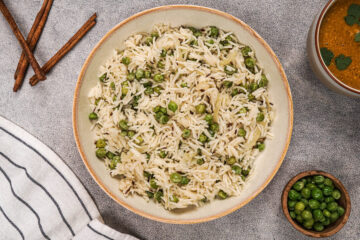
Later in the evening, we’d use them to make pea pulao served alongside our piping hot yellow lentil soup recipe.
Matar pulao is the ideal comfort food that I still turn to when I want something quick and simple, without sacrificing flavor. Now, I can make it all year-round with the help of frozen peas!
Why You’ll Love This Recipe
This peas and rice recipe isn’t just delicious; it’s quick and easy to make, and can be made on the stovetop, in an Instant Pot or by using a stovetop pressure cooker.
It’s packed with flavor, and the leftovers can be stored in the refrigerator for up to four days.
What is a Pulao?
Depending on where you live, you may spell it pilaf (US), pilau (UK), or pulao (India). The earliest documented recipe for rice pilaf (matar pulao) goes way back to the 10th century in the Middle East.
Believe it or not, it is so widely popular around the world. Here are a few countries and regions that serve variations of this dish that you may be familiar with: India, Brazil, Bangladesh, the Caribbean, Central Asia, France, and Greece.
Pilaf or pulao is a rice dish that usually involves cooking in some type of broth or stock (vegetable, chicken, beef, fish, etc.), along with adding a variety of aromatic spices like cloves, red chilies, ginger, vegetables like peas, bell peppers, and tomatoes and other ingredients like shrimp, clams, and sausage.
Just to clarify, pulao is not Biryani even though they use many of the same ingredients. The cooking process, textures, and tastes are where we see the differences. The most well-known version of Pulao is the Spanish version called paella.
What is Peas Pulao?
In India, peas pulao is an extraordinarily popular dish that is made using basmati rice, fragrant spices, and green peas.
The amazing thing about this versatile, vegetable rice pilaf dish is that you can eat it alone or customize it to satisfy any taste bud in your family. It’s also just as filling and nutritious as my simple vegetarian soup recipes.
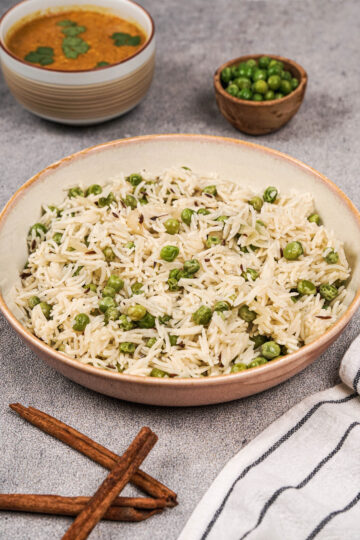
The possibilities truly are endless, which makes this the perfect vegetable rice main dish, side dish, or base for your next family meal, potluck, or picnic.
What is Matar Rice?
In Hindi, matar is known as green peas and pulao is known as rice pilaf. So, interpreted loosely to mean, ‘rice flavored peas,’ it involves way more than rice and peas.
What makes this traditional vegetable rice recipe so special is the combination of flavorful and fragrant spices like cloves, cardamom, cumin, and the contrasting texture of the onions and peas.
It’s also different from vegetable pulao, which uses veggies such as carrot and cauliflower alongside peas. Matar rice only uses peas, without any other vegetables.
Key Ingredients in This Recipe
- Rice: Aged basmati rice works best for this recipe to keep it fluffy, but as I’ll explain in more detail below, you can also use jasmine rice as a substitute.
- Green peas: Fresh or frozen green peas are the other main ingredient. If you’re using frozen peas, make sure to add them at same time as the rice, after the oil, onion and spices have been sautéed.
- Onion: Thinly-sliced is best. If you’re cooking for Jain friends or relatives, you can always leave the onion out!
- Spices: Aromatic spices including cloves, caradmom and cumin are a must for this recipe.
- Olive oil: Since this recipe is vegan, it uses olive oil instead of ghee.
Traditional matar pulao recipes use ghee for a richer flavor. My family has always made the dish with olive oil in an attempt to make it more heart healthy. It works beautifully and you honestly will not miss it!
Make It More Traditional
There are a couple of ways to make this vegan recipe a little more traditional:
- Add mint leaves: Many traditional matar pulao recipes include a handful of fresh mint leaves (pudina), which adds a beautiful fragrance. If you have mint on hand, add it with the peas. It is optional but highly recommended.
- Ginger and garlic: The traditional way to make pea pulao involves adding ginger and garlic. You can either add fresh ginger and garlic, finely chopped, or use ginger-garlic paste to speed things up. Just like mint, this is an optional addition but a great way to add more depth to the flavor.
Choosing the Right Rice
Aged basmati rice is the best type of rice for peas pulao recipes because it holds less moisture and starch than freshly harvested grains.
It comes out fluffy, whereas other recipe types (especially sticky rice) stick together and form large clumps. The ageing process adds a delicious nutty aroma that complements the other flavors in the recipe just perfectly.
Aged basmati rice also helps to keep your peas intact; too much moisture from rice and green peas can easily turn mushy.
But how can you tell if your basmati rice is aged? Aged basmati rice should be clearly labelled in shops. Looking at the grain itself, you can tell if it’s aged because it has a cream/yellow tint and longer, narrower grains than typical basmati. It also feels drier to touch.
If you don’t have any aged basmati rice, you can use jasmine rice as a substitute. The end product will be slightly more moist and ‘stickier’, but the sweet aroma ties in with the other spices really nicely.
Sticky rice should be avoided for pea pulao. The dish should be light and fluffy, so sticky rice is just way too dense and will clump together, making it impossible to keep the grains separate.
Step-by-Step Instructions For Matar Pulao
There are three ways of making this peas and rice recipe: the stovetop method, Instant pot method or stovetop pressure cooker method.
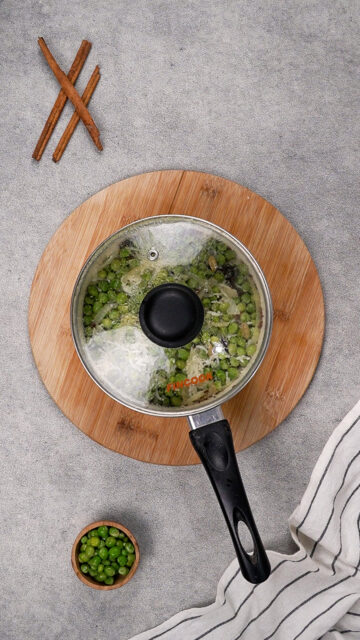
The first stovetop method involves cooking the olive oil, spices and onions in a saucepan, before adding the green peas, basmati rice, water and salt. The ingredients are left to simmer for around 12 minutes, then sit out off the stove for around 5-10 minutes.
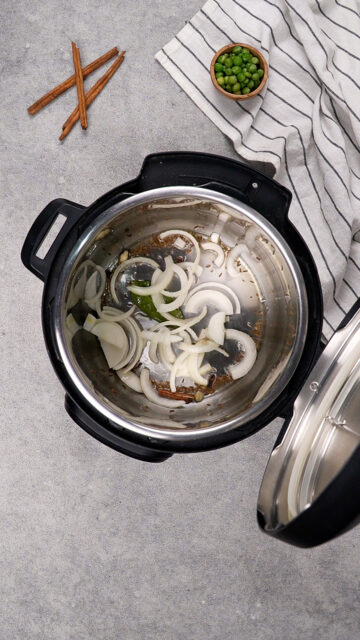
The second method, using an Instant Pot, is just as easy. You can use the sauté mode to combine the onions, olive oil and spices. Once the other ingredients are added, and the valve is switched to ‘sealing’ position, it can be left for around 6 minutes on manual/pressure cook.
The third method uses a stovetop pressure cooker. You’ll need a rice:water ratio of 1:1.5 for this method. Then, all you need to do is cook the recipe on a medium heat for one whistles, turn of the heat and (with caution) release the pressure manually. Open the lid, fluff the rice and serve!
The Instant Pot and Cooking Rice
The Instant Pot has become so popular over the years and with good reason. For me, it replaces my rice cooker and saves me a lot of time in the kitchen when I am in a rush and want to get dinner on the table fast.
If you have hectic days like me, going from place to place running errands around town or with kids, then you would love using the Instant Pot, I can throw the rice in there and when I return home, the rice is done… boom!
It will help you make this matar pulao or vegetable rice pilaf dish a breeze.
Here’s a quick cheat sheet!
|
SHORT GRAIN RICE RICE- 1 CUP WATER- 1 CUP STOVE TOP- 12 MIN. INSTANT POT- 5 MIN. |
MEDIUM GRAIN RICE RICE- 1 CUP WATER- 1 1/4 CUP STOVE TOP- 18 MIN. INSTANT POT- 5 MIN. |
LONG GRAIN RICE RICE- 1 CUP WATER- 1 1/4 CUP STOVE TOP- 15 MIN. INSTANT POT- 5 MIN. |
Tips For The Best Results
- Soak your rice before you make this dish to remove excess starch.
- Opt for dried spices for a big flavor boost.
- If you don’t like bland rice, you can use the tips below to add flavor.
What Can I Add to Rice to Give it Flavor?
Rice by itself is like vanilla ice cream; adding your favorite and imaginative toppings catapults it to a whole new level! Let’s get creative:
✔ Try replacing cooking water with flavored broth. This adds a rich flavor and aroma to the rice.
✔ Add slices of your favorite dried fruit such as mangos, apricots, cranberries, currants, raisins, or even figs. This adds a chewy texture with a hint of sweetness and it also looks beautiful as well.
✔ Add some crunch and texture with your favorite seeds like chia, pumpkin, sesame, flax, and sunflower. Seeds not only amplify the texture of your rice, but they also add tons of nutrition as well. I call this a “win-win!”
✔ Add toasted walnuts, pecans, almonds, peanuts, or even hazelnuts. Toasting is an extra step you won’t regret, it brings out the natural oils from the nuts, intensifies the flavors, is very aromatic and a bonus is, that it’s also good for you.
Storage and Reheating
This pea and rice recipe can be stored in an airtight container for up to 4 days in the refrigerator.
To freeze the rice:
- Cool the rice until it reaches room temperature.
- Label a freezer-safe plastic bag with the type of rice and date. I often use freezer food blocks instead.
- Scoop the desired quantity into the bag.
- Close the bag tightly and lay it on the freezer shelf, where it will keep for up to three months.
To reheat the rice:
- Take the rice out of the freezer bag/block.
- Let it defrost on the kitchen counter for up to two hours.
- Reheat it on the stovetop or in the microwave.
How Do You Spice Up Cooked White Rice?
If I’m reheating, there are still tons of ways I can add flavor to cooked white rice. I just go by what flavor I feel like eating at the moment or what the family requests are.
Rice is a beautiful, blank canvas, so the possibilities are truly endless:
✔ Try adding ghee or olive oil with some salt and black pepper while hot for a simple take.
✔ Want to go sweet, try adding sauces like honey, hoisin, or sweet soy sauce.
✔ Need to add some heat, try adding spices like chile flakes, dried paprika, fresh cilantro, lime juice, or curry powder.
✔ Who doesn’t love dessert? If you want to try something out of the box and transform your white rice into an after-dinner treat, try adding brown sugar, nutmeg, cinnamon, currants, and coconut milk.
Serving Suggestions
The best rice and peas recipe is one that’s served with a complementary condiment. The classic pairing is a cucumber or onion raita, but you could also serve it alongside a refreshing dip such as mint cilantro chutney.
I almost always serve my peas pulao recipe with other Indian vegetarian dishes like dal. Nothing beats dal chawal (rice) for me and my family – it’s our ultimate comfort food. Two of our go-tos are my South Indian dal recipe and my easy vegan dal makhani.
My vegan Indian rice pudding is one of my favorite vegan Indian desserts from the same cuisine, so that’s always reliable if you’re craving a sweet treat afterwards.
Health Benefits & Allergens
The recipe is gluten-free, vegan and dairy-free. It has around 30g of carbohydrates and approximately 178 calories per serving.
The ingredients also have some great benefits:
- Olive oil is rich in healthy fats and antioxidants.
- Cumin is high in antioxidants.
- Cardamom has more antioxidants. It may help with lowering blood pressure, too.
- Bay leaf is a source of vitamin A, vitamin C, iron, potassium, calcium and magnesium.
- Cinnamon is loaded with antioxidants.
- Clove also offers antioxidants, and may improve liver health.
- Green peas have fiber, protein, vitamin A, vitamin K, and are thought to be good for digestion.
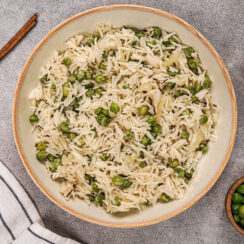
Peas Pulao Recipe (Matar Pulao) — Easy, Vegan & Delicious
Ingredients
The Rice & Peas
- 2 tablespoons olive oil
- 1 medium-sized onion, thinly sliced
- 3/4 cup green peas, (fresh or frozen)
- 1 cup basmati rice, (washed)
- 1 1/2 cups water
- Salt, (to taste)
The Spices
- 1 teaspoon cumin seeds
- 2 green cardamom seeds
- 1 bay leaf
- 2-3 cloves
- 1 inch cinnamon
Instructions
Stove Top Method
- Place a medium-sized saucepan over medium heat and add olive oil.
- Once olive oil is hot, add in whole spices and sauté until aromatic (about 30 seconds).
- Add in sliced onions and sauté until onions turn light brown.
- Add in green peas, basmati rice, water, and salt and mix well.
- Bring to a simmer turn the heat down to medium-low and place a tight-fitting lid on.
- Cook for 12 minutes with the lid on.
- Remove from the stove and let it sit for 5 to 10 minutes with the lid on.
- Use a fork to fluff the rice.
- Serve with yellow moong dal soup or dal makhani.
Instant Pot Method
- On the instant pot, press the “Sauté” mode and add olive oil.
- Once olive oil is hot, add in whole spices and sauté until aromatic (about 30 seconds).
- Add in sliced onions and sauté until onions turn light brown.
- Add in green peas, basmati rice, water, and salt and mix well.
- Close the lid on the pot and turn the valve from “Venting” to the “Sealing” position, then press “Cancel”.
- Set the pot to “Manual/Pressure Cook” (high pressure) and set the timer to 6 minutes.
- Do a quick release and once the pressure is released, open the lid and gently fluff rice.
BON APPÉTIT!
Pro Tips
- You can store your leftovers in an airtight container in the refrigerator for up to 4 days. To reheat, simply put a damp paper towel on the rice before reheating in the microwave or steam oven. The moisture from the paper towel ensures that the rice stays soft and fluffy.
- Want to spruce up bland rice? Add butter or olive oil with some salt and pepper while hot. Replacing your cooking water with flavored broth is also a neat trick.
- Using the dried versions of these spices will still add tons of flavor to your dish.
- Making this dish in place of plain white rice will amplify any meal.
Leave a comment below and let me know how you served this!
Equipment
- Instant Pot
Nutrition
Peas pulao is a one-pot vegetable dish. While it uses many of the same ingredients as biryani, it’s not cooked in the same way. Biryani also tends to be spicier than peas pulao recipes.
For short grain rice, use a 1:1 ratio for rice and water. However, for long grain rice, you should use 1 1/4 cups of water for every 1 cup of water.
Yes, basmati rice should be soaked for 20–30 minutes before making pea pulao to remove excess starch.
You can use frozen peas to cook peas pulao. They should be added at the same time as the rice, after the oil, onion and spices have been sautéed.
To prevent peas pulao rice from becoming sticky or mushy, make sure to use the correct amount of water. You should also soak and wash your rice to remove the starch before cooking peas pulao.
Peas pulao can be made in an Instant Pot or pressure cooker, using the sauté mode to cook the oil, onion and spices, and the manual/pressure cook mode to cook the remaining ingredients.
If you’re cooking on the stovetop, you should add a small amount of liquid and continue cooking the rice on low heat until it’s thoroughly cooked.
Vegetable pulao uses veggies like carrot and cauliflower alongside peas. However, Matar (pea) pulao only uses peas with the rice – and no other vegetables.
Yes! You can leave the onions out of the recipe. I often do this when I prepare pea pulao for my Jain friends and family.
If I serve raita with pea pulao, I usually prepare a salt and pepper raita by whisking some yogurt with salt and pepper; you can also add some grated cucumber to it. An alternative is onion raita.
Yes, matar pulao is the same as pea pilaf. Matar is the Hindi word for peas.
To make matar puloa in a stovetop pressure cooker, use a 1:1.5 rice to water ratio, and cook it on a medium heat for one whistle. Turn off the heat, and being careful and cautious, release the pressure manually. Open the lid, fluff the rice and serve.

Nutrition Disclaimer
Nutrition information is an estimate provided as a courtesy and may vary depending on ingredients used. This content is not intended as medical or dietary advice.
Savita thakur
very nice
Carol
would give 5 stars if it was printable
veggiecurean
THanks. And sorry about printing issues. Try now.
Anna
This was amazing! I made the recipe as is and used vegetable broth. Could not find cardamom pods so used 10-15 cardamom seeds instead. The combination of spices is perfect! I also appreciate a vegan friendly version :). Thank you for sharing, will def be making again
Tia
Delicious