
Acorn Squash Soup with Coconut Milk and Thai Red Curry
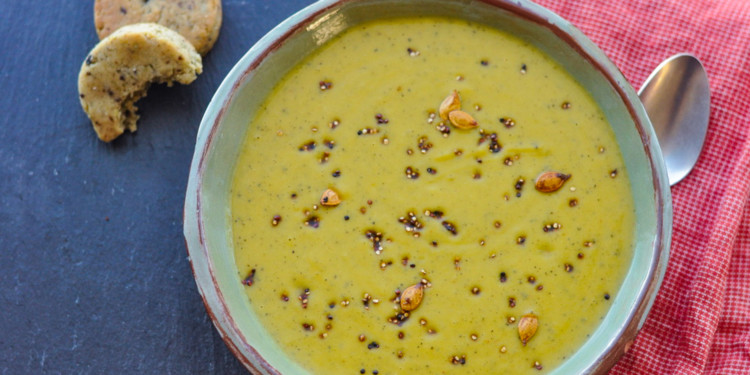
This acorn squash soup is velvety and creamy in texture, and includes coconut milk for body and Thai red curry paste for warmth and spiciness. Often, creamy pureed soups use dairy like milk, but this recipe uses coconut milk, which makes it dairy-free and vegan. Garnishing the soup with toasted pumpkin seeds and crispy quinoa takes it over the top, adding a textural contrast to the creaminess of the soup.
Nothing screams “autumn” to me quite like this soup — its color, aroma, and taste all take me straight to a pumpkin patch covered in crispy red and yellow leaves. It takes a bit of time to prepare the soup if you are also doing the quinoa, but this dish is so packed with flavor you’ll want to make it again and again!
I generally find that fall or winter squashes are too sweet and that most soups that I have them in are generally too sweet for my palate. This led me to decide to add a bit of spice to my squash soup with acorn squash to balance out the natural sweetness. I experimented with za’atar seasoning, taco seasoning, and Indian and Thai seasoning. Of all of them, the Thai red curry paste was the winner. If you are a fan of Thai flavors and also prefer your squash soup on the more savory side, then you will love this soup.
This is a perfect soup for a cold weeknight. It’s filling, especially when you top it with seeds and crispy quinoa.
Why This Version is Different
Many squash soup recipes rely on classic fall flavors like maple syrup, sage, thyme, nutmeg, honey, or apple; however, this version is a little different. Here is what makes this creamy acorn squash soup recipe unique:
- Creamy With No Dairy: Coconut milk adds body to the soup, making it extra creamy without the need for dairy.
- A Little Spicy: This soup includes a little heat from Thai red curry paste; however, you can feel free to adjust it to your taste if you would like it spicier or less spicy.
- Zero Waste: The squash’s own seeds become the topping.
- Vegan as Written: Using no dairy or butter, this squash soup is naturally vegan, and the quinoa adds some filling plant-based protein. However, feel free to skip the crispy quinoa to keep it keto and paleo-friendly if desired.
Ingredients and Substitutions
For the soup base, all you need is a mixture of acorn squash, olive oil, salt, pepper, red Thai curry paste, and stock to make a creamy soup. Here are some notes on some of the ingredients, along with some possible substitutions:
- Acorn squash: Acorn squash is a key element of this recipe, which has green skin and is oval in shape, with bright orange flesh in the middle and a sweet flavor. When choosing an acorn squash at the farmer’s market or grocery store, look for one that is heavy for its size and has dull skin. A fully ripe acorn squash should also have an orange blotch on one side. For this easy acorn squash soup, the squash is halved and roasted whole, and doesn’t require any peeling. If you love cooking and baking with acorn squash or have extra acorn squash on hand, you may also want to try my Acorn Squash Pie recipe.
- Other squash that work: If you would prefer not to use acorn squash, this recipe would be equally delicious with any other type of squash, such as butternut or kabocha, which are also orange-fleshed and cook to a creamy consistency.
- Coconut milk: This recipe calls for standard full-fat coconut milk, but you could use light coconut milk instead if you prefer. The soup will just have a less rich flavor. You can also try this Lemongrass & Coconut Soup if you love creamy coconut milk in soups but are looking for something a little less spicy.
- Thai red curry paste: Thai red curry paste is a spicy red paste that usually includes dried red chilies, lemongrass, galangal, shallots, garlic, lime, and more. It adds warmth, spiciness, and complexity to any Thai curry or soup, and rather than adding a bunch of separate spices, you will only need this paste to pack a punch. When using it in this recipe, start with the recipe amount and add more at the end if you would like the red curry flavors to be amplified or if you enjoy an extra spicy taste.
- Vegetable stock: Using vegetable stock for this soup imparts flavor and richness while keeping the soup completely vegan and vegetarian. When adding it to the soup, add it a cup at a time to control your soup’s thickness, as you may not require the full 4 cups of stock if you enjoy a thicker soup.
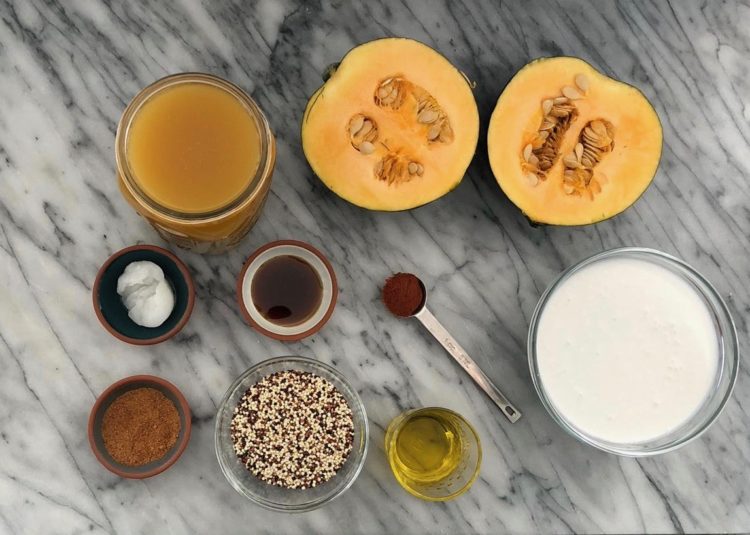
How to Make it: Step Overview
If you are wondering how to make acorn squash soup, making this acorn soup is incredibly quick and easy as there is minimal chopping and the Thai curry paste imparts most of the flavor without the need of additional seasonings. Here is a breakdown of how to make this Autumnal squash soup:
Roast the Squash Halves
In this step, all you have to do is cut the acorn squash in half and remove the seeds, before rubbing the halves with oil, seasoning them with salt and pepper, and roasting them with the skin-side facing down in a 375 F oven until they are tender and the flesh is easy to scoop out of the skin.
Simmer and Blend
Once the squash has cooled enough to handle, simply scoop it out of the skin, place it in a pot with the coconut milk and curry paste, and bring it to a simmer. Then, remove it from the heat and blend it in a high-speed blender, adding stock 1 cup at a time, until your desired consistency is reached. Then, after you have blended the soup, you can return it to a simmer and adjust the salt and curry paste as needed.
Finish With Toppings
Finally, ladle the soup into bowls and garnish them with roasted squash seeds and crispy quinoa before serving.
If you would prefer not to make the garnishes, the acorn soup will only take 1 hour and 15 minutes to make. You could then top it with a drizzle of coconut cream or store-bought pumpkin seeds for a crunchy garnish for easier preparation if you prefer.
Alternatively, if you would like to make the garnishes, you can make the seeds and quinoa ahead of time to make things easier for you when you want to make the soup. They can be stored in an airtight container on the kitchen counter or in your pantry for up to 2 weeks.
How to Roast the Squash Seeds
Whenever you use squash in your cooking at home, it is always a good idea to make roasted seeds with their innards, as they are crunchy, delicious, and quite nutritious. Here is how to roast the squash seeds for this easy acorn squash soup recipe:
- Rinse and separate the seeds from the stringy pulp.
- Toss the seeds with oil, salt and pepper, and roast them alongside the squash, as the recipe does.
- You will know the seeds are ready when they smell toasted and fragrant and have a light golden color.
- Once the seeds are roasted, allow them to fully cool before storing them in an airtight container. They should stay fresh for a few days at room temperature.
Tips for Best Results
While this vegan acorn squash soup is incredibly easy to make, there are a few things to keep in mind to ensure you have the creamiest and most delicious squash soup ever. Here are some tips to ensure you get the best results:
- Roast the squash until it is fully tender so the soup blends to a silky texture.
- If you are blending your soup in a stand blender, blend it in batches and vent the lid when blending the hot soup. Alternatively, you can use a stick blender to blend the soup directly in your pot.
- Add stock gradually; you can always thin it, but you cannot easily thicken it once it is too loose.
- Taste for salt and curry paste after the final simmer, and adjust as needed.
- For the best results and flavor, make the soup a day before you intend to serve it and refrigerate it. That way, the Thai spices in the paste will develop even more in the soup, making it even more flavorful. For this reason, I like to make a big batch that will last me 2-3 days.
Toppings and Serving Suggestions
This Thai curry acorn soup recipe is served topped with crispy quinoa and roasted acorn seeds. I like to make a big batch of the crispy quinoa, as it is a great snack on its own as well. Here are some other types of garnishes that you can add to your squash soup:
- Coconut Milk or Cream: For some added richness, drizzle bowls of this soup with coconut milk or coconut cream for a swirled garnish.
- Cilantro: Garnish the soup with chopped cilantro, which pairs beautifully with the Thai flavors in the soup.
- Serve With Lime Wedges: For added acidity, you can squeeze some lime juice on top of the soup when you are ready to serve it.
This soup works well as an appetizer or as part of a main meal. For an appetizer, it is a wonderful twist on more traditional squash soup recipes when served as a Thanksgiving starter. Meanwhile, if you would like to have it as part of a main meal, you can serve it with crusty bread and a fresh green salad with your favorite homemade vinaigrette or creamy dressing. For more fall soups, consider trying my Roasted Pumpkin & Apple Soup or my Cauliflower & Apple Soup.
Storing, Freezing and Make Ahead
To store the soup, allow it to come to room temperature before storing and/or freezing. If you are storing it in the fridge, place it in an airtight container for up to 3 days. Meanwhile, if you are storing it in the freezer, it will keep for up to 3 months.
It is best to store crunchy toppings like quinoa and seeds in separate containers until you intend to use them. The crunchy quinoa will keep for up to 2 weeks at room temperature and up to 1 month in the freezer.

Acorn Squash Soup with Coconut Milk and Thai Red Curry
Ingredients
Soup
- 2 acorn squashes, (cut in half, seeds scooped out)
- 3 tablespoons olive oil
- Salt and pepper, (to taste)
- 1 14-ounce can coconut milk
- 1 teaspoon red Thai curry paste
- 4 cups vegetable stock
Roasted Seeds
- Squash seeds
- 1 tablespoon olive oil
- Salt and pepper, (to taste)
Crispy Quinoa
- 1/2 cup uncooked quinoa
- 1 tablespoon coconut sugar
- Salt, (just a pinch)
- 1 tablespoon coconut oil
- 1 tablespoon maple syrup
Garnish
- Paprika
Instructions
- Preheat the oven to 375 degrees F and line a baking sheet with parchment paper.
- Slather each acorn squash half with oil, then generously sprinkle salt and pepper on them.
- Place the halves on the baking sheet skin sides down, then place the sheet in the oven to roast until tender (about 1 hour).
- While the squash is roasting, wash the seeds you scooped out and mix them in a bowl with oil, salt, and pepper, then spread them on a new baking sheet lined with parchment paper.
- Place the seeds in the oven with the squash for 30 minutes, let the seeds cool and then store them in an airtight container. Set aside.
- Once the squash is cooled down enough to handle, put all of it into a large pot over medium-high heat.
- Add the coconut milk and curry paste and bring it to a simmer. You should have a very thick base at this point.
- Remove the pot from the heat and transfer the contents to a high-speed blender. Add the vegetable stock 1 cup at a time, pureeing between additions until the soup is at your desired consistency.
- Bring the soup to a simmer again and add salt and more curry paste as desired.
- Preheat the oven again to 340 degrees F.
- In a large mixing bowl, add quinoa, coconut sugar, and salt, and stir to combine.
- In a small saucepan, add coconut oil and maple syrup, then warm over medium heat for 2-3 minutes, whisking frequently until combined and it has no visible separation.
- Immediately pour the liquid over the quinoa mixture and stir to combine until the quinoa is thoroughly coated.
- Arrange the quinoa on a large baking sheet lined with parchment paper and spread it into one even layer, then bake for 20-25 minutes.
- Remove the quinoa from the oven and stir/toss the mixture.
- Let the quinoa cool completely. (Note: This can be made ahead of time and stored in an airtight container.)
- Ladle the soup into cups or bowls, garnishing with the roasted squash seeds, quinoa, and paprika. (Note: Leave out the crispy quinoa part of this recipe to keep the soup vegan, keto, and paleo-friendly!)
- Store any leftover quinoa in a sealed bag or container at room temperature for up to 2 weeks or in the freezer for up to 1 month.
Bon appétit!
Nutrition
Note: Here’s a link to the Thai red curry paste I like to use.
FAQ
Can acorn squash be used to make soup?
Yes. Roasting brings out its sweetness and softens it so it blends into a smooth and creamy consistency.
Both work for soup; however, there are some differences. Butternut squash tends to have a sweeter taste, whereas acorn squash is both sweet and earthy, so the taste in your soup may be a little different. Meanwhile, the firmer nature of acorn squash may mean that it will need longer to cook than butternut squash. However, both should result in an equally creamy soup that is velvety and silky in texture.
Vegetable stock, which is used in this recipe, is the best option as it ensures the soup is vegan and lets the curry and coconut come through.
Common mistakes when making squash soup include under-roasting the squash, which results in the squash not being tender enough to blend; adding all the liquid at once, which makes the soup too loose; and not seasoning at the end. Be sure to take a look at the Tips for Best Results section above to ensure that you avoid these mistakes.
Yes, this soup is vegan as written. If you are looking to make it keto and paleo-friendly, you can omit the crispy quinoa.
Yes, the soup has some warmth from the curry paste. However, you can use less if you would prefer it to be less spicy, or add more if you would like your soup to have a spicier taste.
No, this acorn squash recipe calls for roasting the acorn squash halves and scooping out the flesh.

Nutrition Disclaimer
Nutrition information is an estimate provided as a courtesy and may vary depending on ingredients used. This content is not intended as medical or dietary advice.

Bablofil
Thanks, great article.
GB
YUM, YUM, YUM.
Love those seeds adding crunchiness to the soup.
veggiecurean
Thanks! Why waste those seeds. They are so delicious.
EASY TRI-COLOR VEGETARIAN QUINOA RECIPE | Veggiecurean
[…] Acorn Aquash Quinoa Soup […]
VEGAN BRUSSELS SPROUT SALAD WITH ROASTED SQUASH RECIPE - Veggiecurean
[…] squash, delicata squash, kabocha squash, and spaghetti squash to name just a few. This easy-to-make Acorn Squash Soup get its creaminess from coconut milk and a touch of spice from Thai red curry paste and it’s an […]