
Vegan Keto Flatbread Recipe (Almond + Coconut Flour, No Eggs)
This vegan keto flatbread — made with almond flour, coconut flour, and psyllium husk and completely free of eggs, dairy, and gluten — is the recipe I reach for every time I want the comfort of bread without the carbs.
Made in just 25 minutes and with 7 ingredients, this flatbread is keto, vegan, grain-free, gluten-free, and contains absolutely no eggs, butter, or cheese, which are commonly used in keto baking.
Coconut and almond flour are combined with psyllium husks to create a pillowy and pliable flatbread that won’t break when rolled out.
In India, and other parts of the world, eating with your hands is common practice at the dinner table. Indian breads such as naan, roti, and parathas are used to scoop up veggies and absorb the delicious savory sauces along the way.
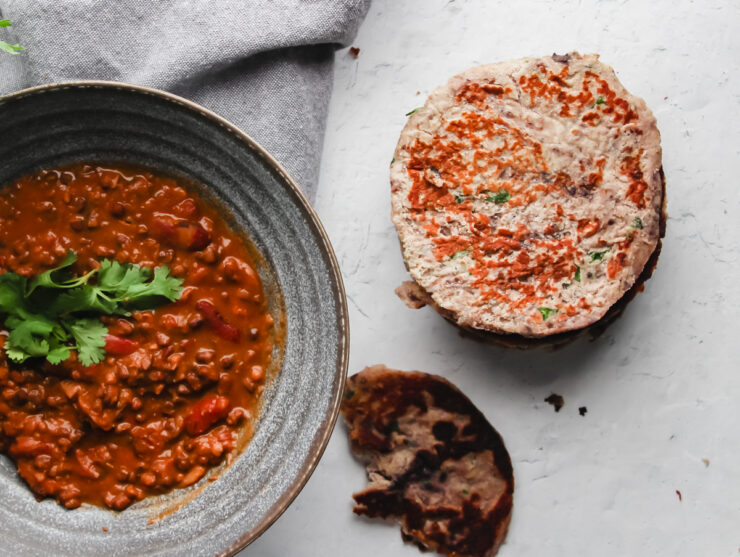
However, this classic bread contains refined wheat and lots of carbohydrates, which I try to steer clear of these days. Being able to recreate the dishes that I ate growing up as a child has been a complete game-changer.
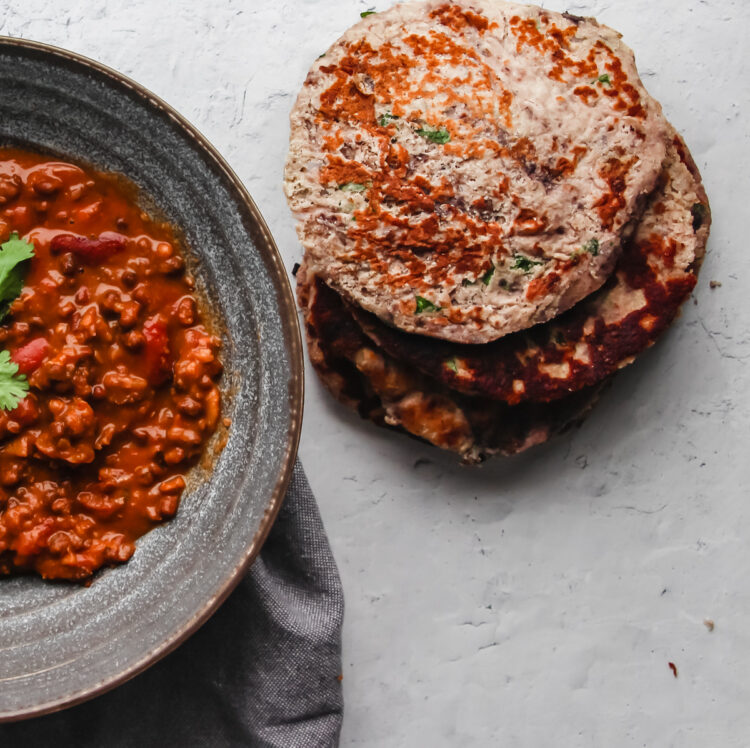
I use this flatbread in place of traditional Indian naan to scoop up curry such as my cauliflower coconut curry! For more vegan bread recipes, check out my vegan naan or vegan keto seeded bread.
Why You’ll Love This Recipe
- It’s tender and holds up well. The flatbread tears the way good bread should, with a little resistance. Adding baking soda makes it soft and fluffy.
- My recipe has an Indian paratha twist. I added cauliflower, onion and jalapeño.
- It can be personalized. Use it as a grain-free tortilla and pizza crust or roll it out even thinner and make sweet and savory crepes.
- It’s vegan and gluten-free. The recipe doesn’t use any eggs, dairy or gluten.
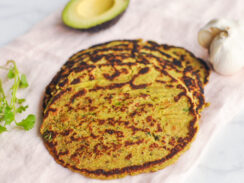
- The only vegan keto flatbread: made with no eggs, no dairy, no gluten — this works for vegans following a keto or low-carb diet, which almost no other flatbread recipe can claim (except for my avocado flatbread recipe).
How I Discovered This Keto Flatbread Recipe
When I was on the vegan keto diet, I used to think flatbread was off the table for me. Not metaphorically – literally. I had spent months cutting carbs, feeling good, and then someone would pull out a warm, pillowy bread at the table and I’d just… sit there, smiling, pretending I wasn’t devastated.
So one rainy afternoon, I experimented with a bag of almond flour, some leftover coconut flour, and absolutely nothing to lose, and came up with this vegan flatbread recipe after two tries.
This recipe was not easy. The first time I made it, it tasted good, but it didn’t hold its shape and structure. I was a bit disappointed. Over the next few days, I kept thinking, “How can I give this gluten-free, grain-free dough more structure?”
And then it came to me. Growing up, my grandmother and mother would fast once per month. They’d have grain-free tortillas, where they added psyllium husk to the dough. I ordered some psyllium husk online and tried it: viola!
When I was on the keto diet, it was my Sunday ritual. I would make a big batch, tuck them between parchment and keep them in the fridge.
Topped with avocado and herbs, alongside a bowl of soup, or just warm and plain, it’s still one of my most-reached-for recipes on Veggiecurean. I usually make it around 1–2 times per month, especially on cold days. It doesn’t make me feel sluggish mid-day and keeps me full for the afternoon.
Every time I make this recipe, I try something new. Here are some other additions I have enjoyed in this recipe:
- Grated ginger adds a bit of that tangy and earthy flavor I like.
- If I want some kick to the recipe, I chop some green chilies and add them in.
- If I don’t have cauliflower, I substitute it with grated broccoli instead.
- I’ve also added other spices like cumin seeds and coriander powder to give it more of an Indian flavor.
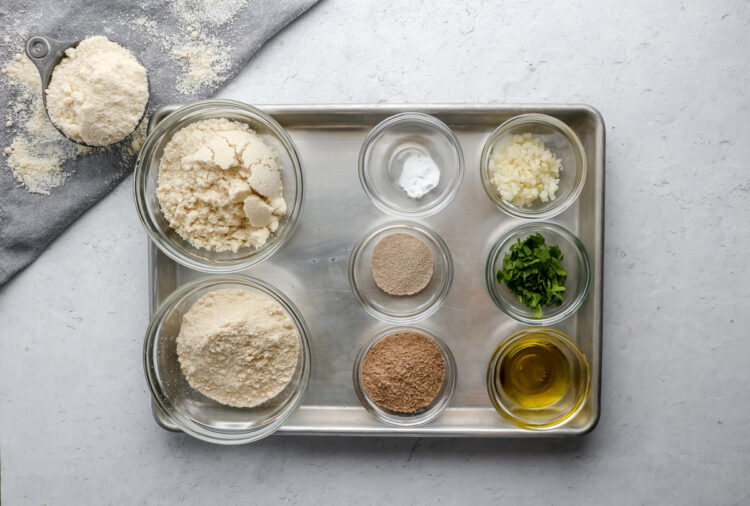
Key Ingredients In The Recipe: How to Make Gluten-Free Naan Bread (Keto Flatbread)
Psyllium husk: In keto-vegan baking, I use psyllium husk to create a soft and chewy texture in the flatbread without having to add eggs. Psyllium husk is also high in fiber and is frequently used as a supplement.
Coconut flour: Not to be confused with shredded coconut, coconut flour is a low-carb, high-fiber flour and gives the flatbread a slight sweetness.
Almond flour: Almond flour is high in protein and is one of our two main ingredients, so try not to sub it out with another gluten-free flour. I love Bob’s Red Mill almond flour for this.
Dry yeast: It provides rise to our flatbread, but is not a must.
Cilantro leaves: You can use any leaf herb – cilantro, fenugreek, or parsley.
Cauliflower: I like to add cauliflower to the bread. It’s okay to leave it out too.
Water: Lukewarm water helps the psyllium husk absorb better.
Olive oil: I like olive oil, but you can use any oil such as avocado, sunflower, or grapeseed.
Baking soda: This adds some rise and fluffy texture to the flatbread. You can skip it if you don’t have it, and it’ll still have great texture.
Step-by-Step Instructions
Making my vegan flatbread recipe is easy enough and begins by combining the ingredients in a mixing bowl. You’ll use your hands to knead the dough for around a minute. Then, let the dough sit for 10 minutes covered with a moist paper towel, until it feels soft and elastic.
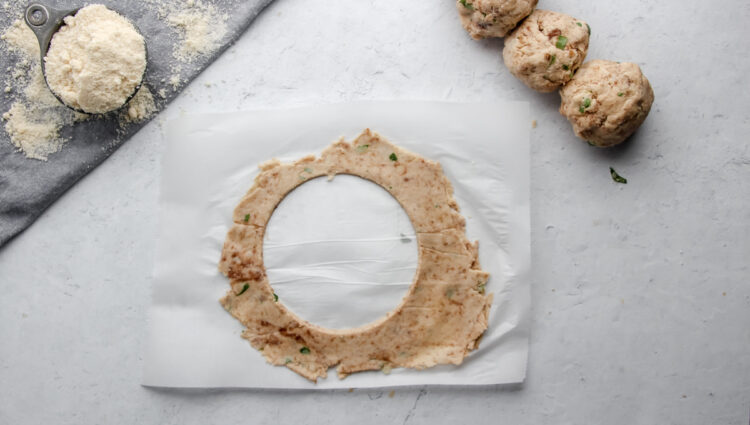
The next step is rolling the dough. Roll out your flatbread into perfectly round shapes. The flatbread dough is delicate so I recommend rolling it out with a rolling pin in between two pieces of parchment paper.
Use a 5–7-inch cookie cutter to cut out a round shape, or if you don’t have a stencil, just use any round bowl and follow its shape with a small, sharp knife. You can keep the trimmings for a new ball.
You’re then ready to cook each piece at a medium-high heat on a griddle, brushed lightly with olive oil. Remember to remove the parchment paper before cooking each side; the first side should take about 2–3 minutes and the flipside about 1–2 minutes.
Tips For The Best Results
- Slightly underbake your flatbread if you know you’re going to freeze it. Keto flatbread will finish cooking while you’re reheating it, and come out perfectly rather than overdone and dry.
- Don’t skip psyllium husk. Homemade flatbread recipes made with psyllium husk freezes particularly well because it holds moisture even through the freeze-thaw cycle. As the bread doesn’t have gluten as a binder, it also gives structure to the flatbread. I like to use this psyllium husk.
- Avoid refreezing your flatbread once it has thawed. This is why I recommend placing parchment paper between every single slice before freezing it. Not only does it stop it from sticking together, but it also makes it easy to pull out only what you need each time.
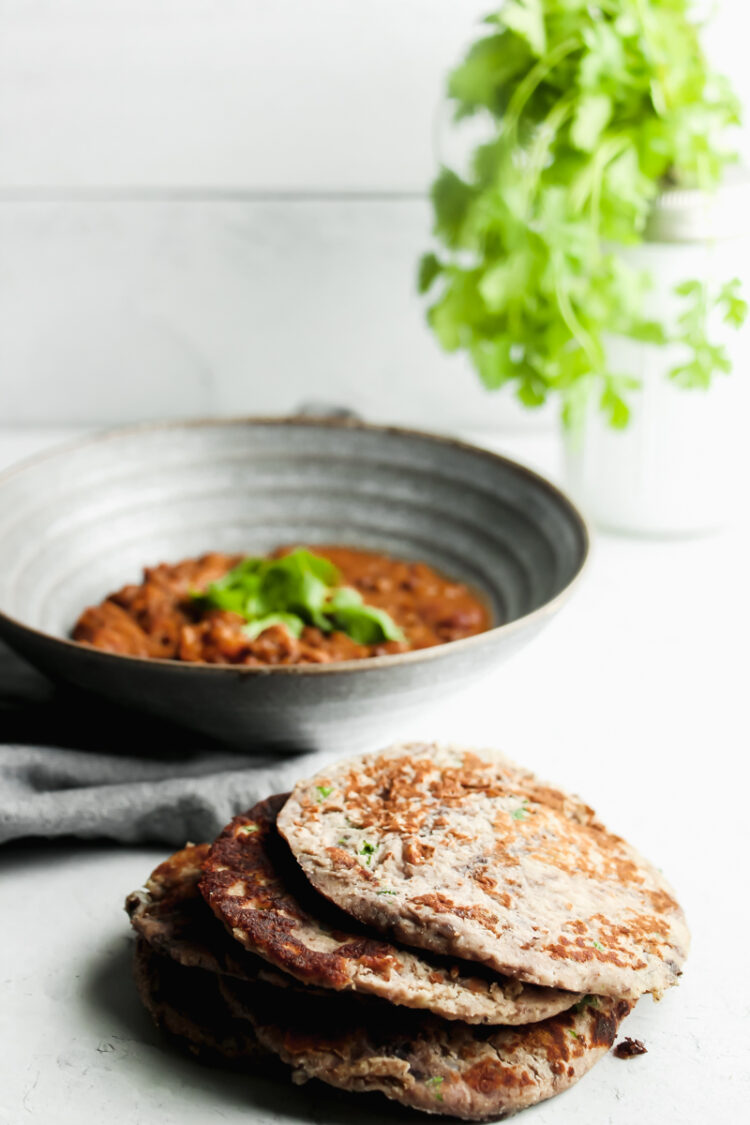
Storage & Reheating: How to Store and Freeze Flatbread
1. Store at room temperature for 1–2 days
Since there’s no dairy or eggs in this flatbread, you can store it in your pantry in an airtight container or ziplock bag for 1–2 days maximum.
You’ll need to stack the pieces with parchment paper placed between each one, so that they don’t stick together.
Make sure to keep the bread away from direct sunlight or heat. After two days at room temperature, the bread will start to dry out and get brittle.
2. Store in the refrigerator for 5–7 days
This keto flatbread recipe lasts 5–7 days in the fridge. Same rule: place parchment paper between the pieces and store them in an airtight container or ziplock bag. If you decide to use a ziplock bag, you’ll need to press out as much air as possible before sealing it.
The cold will cause the bread to stiffen slightly, but it goes back to normal easily when it’s reheated.
3. Store in the freezer for up to 3 months
The best storage method for keto flatbread is to freeze it. It freezes beautifully for up to three months. Let the flatbread cool completely before freezing it; if you freeze warm bread, you’ll get ice crystals and sogginess.
Just be sure to wrap each one separately in parchment paper when you store it in the freezer so that they don’t stick to each other. You can then label it with the date and pull out individual pieces without defrosting the whole batch.
There are several ways to reheat the bread from frozen:
- Microwave (best for speed): Wrap the bread in a damp paper towel and reheat it for 15–20 seconds in the microwave.
- Skillet (best for naan or wraps): To keep the bread soft, you can reheat the bread on a dry pan (medium heat) for 1 minute on each side.
- Oven (best for texture): Cover the bread in foil and reheat it for five minutes at 300°F.
- Toaster (best for pizza bases and crisp): One cycle, straight from frozen.
Can You Store the Dough in the Refrigerator?
The keto flatbread dough stays fresh in the refrigerator (in an airtight container) for up to four days. Therefore, you can make the dough ahead of time. But the flatbread is best served fresh.
Serving Suggestions
My easy Indian flatbread recipe is one of my most versatile side dishes, as it can be used to scoop up just about any curry, stew or soup. However, I particularly like theseways to serve it:
- Use it as a naan substitute for curries like my tofu tikka masala, which is also vegan and gluten-free.
- Serve it with a classic dip, like hummus, baba ganoush or tzatziki, for a filling snack.
- Experiment with toppings like tomatoes, olive oil, roasted veggies and cheese for a pizza-style snack. When crisped, it acts like a pizza crust.
- Use it like a tortilla wrap if you’ve rolled the dough thin. You can add tofu, roasted vegetables and other ingredients inside for a quick, filling lunch or breakfast.
For more keto-friendly and vegan recipes, check out my ultimate favourite keto vegan recipes.
Nutritional Information
This keto flatbread recipe is high in carbohydrates, which provide essential energy for your everyday activities. Each serving has around 7g of fiber and 4g of protein.
- Coconut flour is a good gluten-free alternative to wheat flour. Just a 1/4-cup serving offers around 13% of your Daily Value (DV) of potassium and 11% your DV of iron.
- Almond flour is another gluten-free flour. The flour is high in healthy fats and fiber.
- Psyllium husk contains soluble fiber and acts as a prebiotic, which can help to improve your gut bacteria.
- Olive oil is another great addition, with antioxidants and healthy fats.
- Cilantro, as well as being delicious, has small quantities of vitamins A, C and K.
Is it Possible to Follow a Keto Diet as a Vegetarian or Vegan?
Low-carb diets have become popular in the last 20 years as many people credit them for weight loss and reduced blood sugar and insulin levels.
The ketogenic diet is a low-carb diet that calls for carb intake to be kept under 50 grams per day to maintain ketosis, a metabolic process in which your body burns fat for fuel instead of glucose. It involves drastically reducing carbohydrate intake and replacing it with fat.
Traditionally, low-carb diets have relied solely upon meat, dairy, and egg intake, but there are many plant-based options that one can choose instead.
Vegetarian and vegan diets usually consist of grains, legumes, starchy vegetables, and fruits – all foods heavy in carbohydrates. Vegetarians can enjoy a keto diet by sticking to milk, yogurt, cheese, and egg products to meet their protein and fat needs.
A vegan diet, however, is a little bit more complicated. Low-carb sources of plant-based protein include tofu, tempeh, and all types of nuts and seeds and their butter. Vegans can also consume coconut products (coconut oil, coconut milk, coconut flakes/shreds), avocados, and plenty of low-starch vegetables and low-sugar fruits
Can You Use Coconut Flour and Almond Flour on the Keto Diet?
If you’re new to keto baking, you should become acquainted with two of the most versatile flours available – coconut and almond. Both are grain-free, low-carb, and naturally gluten-free – all of which are crucial when you’re trying to stay in ketosis.
If you’re following a low-carb diet, start experimenting with these flours in addition to other keto-friendly baking ingredients such as psyllium husks, ground flaxseed, sunflower flour, and pumpkin seed flour.
When you’re craving traditionally carb-heavy foods, almond and coconut flour can be a blessing. Try other baked goods using these flour alternatives, such as pizza crusts, muffins, cookies, cakes, and more.
Almond flour is the most popular low-carb flour sold in grocery stores. Rich in fiber and protein, almonds are the ultimate superfood and contain only 2 net carbs per serving (¼ cup), meaning they won’t spike your blood sugar. When baking, be sure to use finely sifted blanched almond flour.
Almond meal is too coarse in texture and appearance and will yield a grainy result in your baked goods. Because almond flour can be expensive, I will sometimes use the leftover pulp from my almond milk recipe and dehydrate it before pulverizing it into an almond meal.
To make homemade blanched almond flour, make sure to peel your almonds before making the almond milk so that your pulp doesn’t contain any of the brown skins.
Coconut flour has a very high fiber content and is low in carbs, making it especially filling and satisfying for those trying to lose weight. This flour is super absorbent and needs a lot more moisture in baking, which can be provided by adding extra oil and water.
This is generally why you see eggs being used in keto baking. Similar to almond flour, it also contains just 2 net carbs per serving.
Vegan Keto Flatbread (Almond + Coconut Flour)
Ingredients
- 2 tablespoons psyllium husk
- 1/2 cup coconut flour
- 1/2 cup almond flour
- 2 teaspoons dry yeast, optional
- 1 tablespoon cilantro leaves, chopped
- 2 tablespoons cauliflower, grated
- 1 jalapeno, chopped, optional
- 1 cup water, lukewarm
- 1/4 teaspoon baking soda
- 1 tablespoon olive oil, plus more for brushing
Instructions
- In a medium mixing bowl, add the psyllium husk, coconut flour, almond flour, dry yeast (if using), cilantro leaves, cauliflower, jalapeno (if using), water, baking soda, and 1 tablespoon of olive oil. Stir the dough with a spatula.
- Use your hands to knead the dough for 1 minute. The dough should be moist then get softer and slightly dryer as you go.
- Keep the dough in your mixing bowl and cover with a moist paper towel, then set aside for 10 minutes. The dough should be soft, elastic, and hold well together, ready to roll.
- Cut the dough into 4 even pieces and roll each piece into a small ball.
- Place one dough ball between two pieces of parchment paper, press the ball with your palm, and start rolling with an 8-inch rolling pin.
- Peel off the top layer of parchment paper from the flatbread, then use a 5-7-inch cookie cutter to cut out the round flatbread. Keep the outside dough to reform another ball and roll more (this is how you make 2 extra flatbreads from 4 balls!).
- Warm a griddle on medium-high heat and brush some olive oil on the griddle.
- Flip the flatbread on the hot pan and carefully peel off the parchment paper from the top.
- Cook for 2-3 minutes on the first side, then flip using a spatula and cook for 1-2 more minutes on the other side. Repeat these steps for the rest of the balls.
BON APPÉTIT!
Nutrition
FAQs
You can’t make a keto flatbread without psyllium husk. Apart from adding fiber, it acts as a binder and structure enhancer. Without it, the dough won’t roll out, and it’ll be very hard to give structure to the flatbread.
For a keto flatbread, coconut and almond flours work the best for taste and nutrition macros. I don’t recommend substituting them with a different flour.
Coconut and almond flour bread are really dry and absorb moisture very quickly. How the flour was stored, and the humidity in the kitchen, play an important role. If you live in a humid area (such as near a lake or ocean), the flour will be moist,er and you’ll need less liquid. If you live in a dry climate, you will need more water to make the dough the right consistency. Therefore, you should check the dough consistency while you’re making the dough; when you poke it, it shouldn’t stick to your fingers.
Gluten is what gives most breads their stretch and flexibility. Keto bread cracks because it has no gluten. Therefore, without it, you will need psyllium husk to build that structure.
Yes, not all keto flatbreads need yeast. This recipe does not use yeast.
Yes, you can use keto flatbread to make wraps, pizza or naan. It’s a delicious way to use the bread.
Keto flatbread lasts 1 – 2 days at room temperature and 5 – 7 days in the refrigerator. You should store it in an airtight container or ziplock bag and keep it away from direct sunlight or heat. Each piece should be divided by parchment paper to prevent them from sticking together. Keto flatbread also freezes well for up to three months.
Yes. The recipe contains a total of 11g carbs and 7g of fibre, which equals 4g net carbs per serving.
Yes – it was designed as a grain-free naan alternative for Indian dishes like curry.

Nutrition Disclaimer
Nutrition information is an estimate provided as a courtesy and may vary depending on ingredients used. This content is not intended as medical or dietary advice.
Maria
This bread held up pretty well when forming the dough and was delicious!
veggiecurean
Thanks for trying Maria. Glad you liked it.
Sara
how many calories are in one flatbread?
veggiecurean
Dear Sara, thanks for reaching out. 158 calories in one flatbread. Enjoy!
sharmila ishmail
Hi do you have the nutritional information?
veggiecurean
Dear Sharmila, great question. Thanks for asking. Here is the nutrition information. I hope it’s helpful. Amount per serving (1 flatbread). I hope it’s helpful. Warmly, Shikha
Calories 119
Total Fat 7.1g
Saturated Fat 0.9g
Cholesterol 0mg
Sodium 89mg
Total Carbohydrate 15.5g
Dietary Fiber 11.5g
Total Sugars 0.1g
Protein 3.1g
Jen
Can you omit the yeast in this recipe?
veggiecurean
Yes! You can leave out yeast. It still comes out really good. Enjoy!
Lola
Looks great! Can this be baked?
veggiecurean
Thanks Lola. I have never baked this bread. I guess baking would work. You would just have to flip it halfway to make sure both sides are cooked fully. I am going to try baking it this weekend and get back to you on how it comes out for me. Enjoy!
veggiecurean
Hi Lola, I made this recipe baking instead of on the griddle. Baking makes the bread dry and hard. I do not recommend baking this bread. Hope this helps. Enjoy!
Lauren
This was delicious! I made them for breakfast (pancake style), so without cauliflower, cilantro or jalapeno. I did not put yeast either, and they turned out wonderful, so soft and light, yet very filling. The dough was a little bit sticky (maybe because there was no cauliflower) but I found that it was very easy to roll it into balls with slightly wet hands. I love the fact that you can use them for sweet or savory meals, adding herbs, veggies or spices, and that the dough keeps in a fridge for a few days. I will definitely make this recipe again and again. Thank you!
veggiecurean
Dear Lauren, I am so happy to hear that you enjoyed them. Yes, these are super light and soft and not too filling. Thanks for the trying and thanks for your feedback.