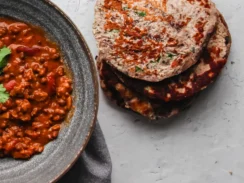
Gobi Paratha (Gobhi Cauliflower Paratha)
Gobhi paratha is a popular whole wheat flatbread from Punjab, India, traditionally stuffed with a spicy cauliflower filling. It’s enjoyed by Indians all over for a savory breakfast and lunch because it’s considered a complete meal by itself and never served with curry. Growing up, these were a staple in my school lunchbox — I could eat them with my hands while playing and yapping away with my friends! My husband and I love these while our kids love Aloo Parathas, which are similar but stuffed with potatoes. These freeze well if wrapped in aluminum foil, you just have to defrost them on the kitchen counter for about an hour and reheat them on a griddle or pan when you’re ready to eat!
When packing them in a lunch box, I always added sliced cucumber and carrot sticks for crunch and freshness. It adds a nice contrast to the soft, rich paratha.
Before packing, it is really important to make sure that the paratha have cooled down as they will get soggy if you pack them right away. You should also blot any excess oil from them. When packing the paratha, first wrap them in something breathable first – I use paper towel – before putting it in a lunchbox or other airtight container. This layer absorbs residual steam and moisture.
What is Gobi Paratha?
Gobi paratha is a delicious whole wheat flatbread recipe from the Punjab region of India, which is filled with a spiced cauliflower mixture. Unlike other types of bread, parathas don’t contain any leavening, which is how they become flatbreads. They are also typically cooked on a hot griddle or in a hot pan on top of the stove so that they become a nice golden brown.
Gobi parathas make a main meal on their own and aren’t served with curry in the way that naan is. They are typically served for breakfast or lunch on their own or alongside chutney or Indian pickles for some added flavor.
Aloo parathas are similar to gobi parathas in that they are stuffed with a savory filling. However, instead of being filled with cauliflower, aloo parathas include a spiced potato filling.
Ingredient Notes
The dough for the gobi parathas only requires three ingredients whereas the filling only needs five. Here is everything you will need to make this delicious cauliflower recipe:
- wheat flour
- water
- olive oil – Olive oil is a replacement for more traditional ghee to make vegan parathas.
- cauliflower – Shredded cauliflower makes up the base of the filling, adding earthy flavor and some texture.
- ginger – Ginger imparts a warm, spicy taste to the cauliflower filling.
- cilantro leaves – Cilantro is citrusy and bright-tasting which helps lift the flavors of the filling.
- salt
- garam masala – This is a classic Indian spice blend that includes spices like cumin, cinnamon, cloves, mace, fennel, coriander, ginger, and more.
Addressing the Water Problem
Getting the moisture out of the cauliflower filling is one of the most important steps for gobi paratha, since excess water is what causes the filling to burst through the dough, makes rolling nearly impossible, and leaves you with a soggy, gummy paratha instead of a flaky one.
The key is to add salt to the grated cauliflower and let it sit for 10 minutes. Salt draws water out of cauliflower through osmosis, and you’ll actually see this happening: the pile of grated cauliflower will start to look glistening and wet, sometimes with visible pooling liquid at the bottom of the bowl.
I like squeeze the salted cauliflower by hand. This is the step people most often skip, and it’s the one that matters most. Take small handfuls of the salted, rested cauliflower and squeeze firmly over the sink or a bowl. You should feel a noticeable amount of liquid release between your fingers, and the cauliflower should go from looking wet and heavy to looking dry, fluffy, and noticeably reduced in volume, almost like slightly damp sand rather than a wet slurry. Don’t skip this even if the cauliflower doesn’t look overly wet after salting; there’s almost always more moisture in there than it appears.
Rolling Technique
When rolling the dough, you need to dust your work surface and rolling pin with flour to prevent it from sticking. Then, roll each portion of dough into a circle that is 3 to 4-inches in diameter.
If you find that your dough tears when you are first rolling it out, there are a few reasons why that might be and some ways to troubleshoot:
- Dough May Be too Dry: Check that your dough isn’t too dry, and if it is, add water a little at a time to re-moisten the dough if needed.
- Dough Not Soft and Pliable: Dough that doesn’t roll out easily often indicates that the dough wasn’t kneaded enough. When you knead dough, it will usually feel quite firm and not have a smooth texture at the start, but will soften and become more elastic as you knead it. When the dough is properly kneaded, it should be a smooth ball that has some elasticity to it. You should also be able to stretch out a small piece to where it is almost see-through without it tearing. If your dough is tearing when you roll it out and you suspect you didn’t knead it enough, knead it again until it reaches a pliable consistency before setting it aside, covering it, and allowing it to rest again for at least 20 minutes or so.
- Insufficient Resting Time: The resting process helps relax the gluten in the dough, making it easier to work with and roll out. If your parathas are tearing when you roll them out, you may need to rest your dough for longer to relax the gluten.
- Filling is Too Wet: If there is too much moisture in the filling, it can cause the dough to soften, making it easier to tear. Before making your filling and assembling your parathas, you should mix the grated cauliflower with salt and allowing it to sit for at least 10 minutes so the salt helps draw out the moisture. Then, squeeze out the moisture before proceeding with assembling the parathas.
Once your dough is rolled out, it then gets filled with the cauliflower filling. To do so, simply place some filling on top of each portion of dough before pulling the edges of the dough over the filling so you can pinch then on top to seal. You should pull the dough tightly over the filling to reduce your chances of trapping air into the middle of the dough.
Finally, each dough portion gets rolled out into a 6 to 8-inch circle. If you find that your dough tears mid-roll, it may be that you are putting too much pressure on the dough when you are rolling it out. You can simply adjust the pressure you are using to prevent the remaining parathas from tearing as you roll them out. You should roll them very gently and take your time to ensure they get to the appropriate size and keep their shape.
Freezing and Reheating
Making cauliflower paratha can be labor intensive, but fortunately, the cooked parathas freeze beautifully for those who are looking for some convenience on busy nights. Here are all the steps to freezing the gobi paratha:
- Let the cooked paratha cool completely to room temperature; freezing them warm causes condensation and sogginess.
- Stack them with parchment or plastic wrap between each layer.
- Wrap the stack tightly in plastic wrap, then place in a freezer bag or airtight container, pressing out air.
- Label and freeze for up to 1 to 2 months.
- To reheat, no need to thaw first; place directly in a dry or lightly oiled skillet over medium-low heat, covered, until warmed through, then uncover to re-crisp the exterior for the last minute or so per side. A toaster oven or air fryer also works well for re-crisping.
Serving Suggestions
Parathas are almost never served on their own and this gobi paratha recipe is no different. Simply serve them alongside some yogurt or curd for a tangy contrast or with Indian pickles or chutneys. If you would like to make your own chutney at home, you may be interested in trying my Mint Cilantro Chutney which is refreshing, herbaceous, and spicy. Meanwhile, for beverages, there is nothing like serving these fluffy, heartwarming cauliflower parathas with cups of spiced chai such as my Masala Chai.
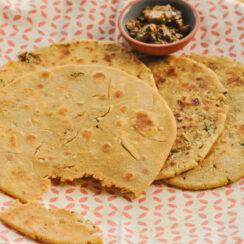
Gobi Paratha (Gobhi Cauliflower Paratha)
Ingredients
Dough
- 2 cups wheat flour
- 1/2 cup water
- 2 tablespoons olive oil
Cauliflower Filling
- 1/2 head cauliflower (grated)
- 1 inch ginger (peeled, grated)
- 1 handful cilantro leaves (chopped)
- 1/4 tablespoon salt
- 1/2 tablespoon garam masala
Frying
- 1 teaspoon olive oil
Instructions
Making the Dough
- In a large mixing bowl, add wheat flour then water and oil gradually, and knead into soft dough ball for about 6 minutes.
- Wrap dough in a plastic or wet paper towel and set aside for 1 hour.
Making the Filling
- Add salt to grated cauliflower and let it sit for 10 minutes. Squeeze out excess moisture before placing it in a small bowl.
- In a small bowl, mix cauliflower, ginger, cilantro, salt, and garam masala.
Rolling Parathas
- Divide dough into 8 round balls and cover with a damp towel to prevent drying.
- Sprinkle the work surface with flour and roll each ball into 3- to 4-inch circles.
- Add a portion of filling in the center of each circle, then pull the edges of the dough over the top of the ball and pinch together to seal.
- Flip the stuffed dough ball over so the seal is on the bottom and use a rolling pin to roll it into a 6-to-8-inch round.
Cooking the Parathas
- Heat griddle and dry roast parathas, cooking on both sides until lightly browned (about 2 minutes on each side).
- Brush 1/2 teaspoon oil on top of the paratha, then flip the oiled side down and cook until the underside is golden brown.
- Repeat on the other side. Both sides should be golden brown.
BON APPÉTIT!
Nutrition
FAQ
Excess water in the filling is the most likely cause of the dough tearing when you roll it out, but it could also be because the dough is too dry, the dough hasn’t been kneaded enough, or it wasn’t rested for long enough. To prevent these issues, it is important to pre-salt the shredded cauliflower so its water leaches out before you use it in your filling. You should also make sure that you handle the dough correctly by giving it a sufficient amount of kneading and resting time.
Yes, this is one of the most important steps of making gobi paratha! Simply toss the grated cauliflower with salt and allow it to sit for at least 10 minutes before you mix it with the other filling ingredients. As the cauliflower sits, its water will leach out so that it sits in the bottom of the bowl. You will then want to squeeze the grated cauliflower to remove any excess water before you use it in the filling.
Yes, gobi parathas freeze beautifully! Once cooled, you should layer them with parchment or plastic wrap between each layer. Then, wrap the entire stack with plastic wrap before putting them in a sealed container or freezer bag, and in the freezer. They will keep for up to 1 to 2 months.
The difference between these two types of paratha are their fillings! Gobi paratha have a cauliflower filling whereas aloo paratha have a potato filling.
Gobi paratha can be served with yogurt, Indian pickles, or chutney for contrasting flavor. You can also serve them with cups of heartwarming chai.
This version of gobi paratha is vegan as it uses oil in the dough and for frying rather than ghee. Ghee is more traditional for paratha recipes but olive oil it a good substitute for keeping it vegan.

Nutrition Disclaimer
Nutrition information is an estimate provided as a courtesy and may vary depending on ingredients used. This content is not intended as medical or dietary advice.