
South Indian Dal Recipe — Red Lentil Dal with Coconut Milk
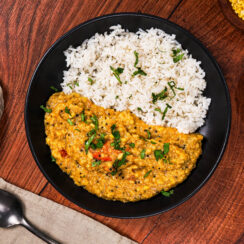
What I love most about my South Indian dal recipe is the flavor: it’s sweet, bold, earthy and warm all at once, and absolutely bursting with South Indian flavors like curry leaves, mustard seeds, and coconut milk. My family enjoys eating this vegetarian Indian recipe with some steamed basmati rice.
Growing up in Delhi and eating primarily North Indian food, we would occasionally go out to eat dosa, a South Indian meal.
I always loved the flavors in South Indian food, but the North Indian in me loves dal, and so I wanted to marry my North Indian dal with South Indian flavors. The product is this red lentil recipe with South Indian flavors.
What is South Indian Dal, and How Is It Different From North Indian Dal?
The flavors of Indian food are very diverse – in North India, families use a lot of dairy, wheat, and cumin seeds, whereas in South India (which is more coastal), food is often flavored with coconut milk, curry leaves, and mustard seeds.
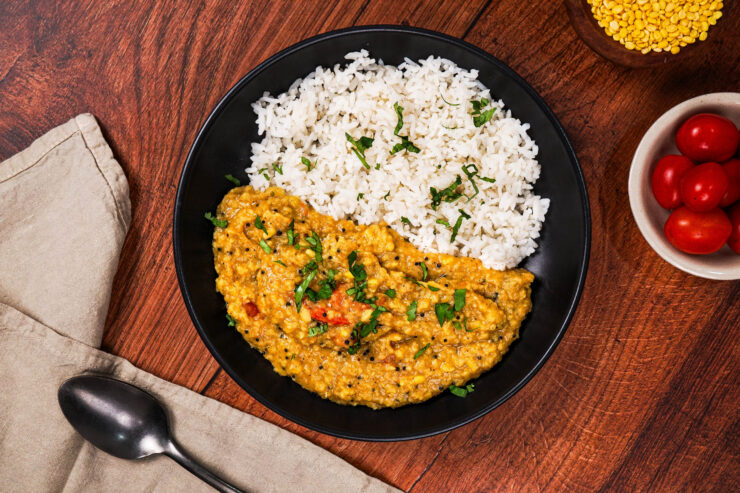
In North India, we never add coconut milk to our dal. North Indian dal recipes like dal makhani and dal tadka tend to be creamy due to the heavy use of ghee or cream (note, if you’re vegan, my vegan dal makhani is ghee-free).
The dal in North India tends to be mild, using a tomato-onion base and lots of earthy cumin.
In comparison, South Indian dal recipes call for coconut milk instead of cream and tend to have less onion. The spices tend to be more aromatic, with curry leaves and mustard seeds as the base flavor.
The trio of coconut milk, curry leaves and mustard seeds feels bold and soothing at the same time. The coconut milk also adds some much-needed creaminess and sweetness to the dal. However, it’s rich without being too heavy and warm without being too spicy.
With South Indian dal, tamarind and lemon are often added to make the dish more sour.
What Makes This South Indian Dal Different
We make this particular South Indian dal recipe during the winter months a lot, on cold evenings when we are craving something smooth and creamy. It fills our tummies and warms up our souls.
It’s a completely vegan dal recipe that’s warm, comforting and ready in 40 minutes at most.
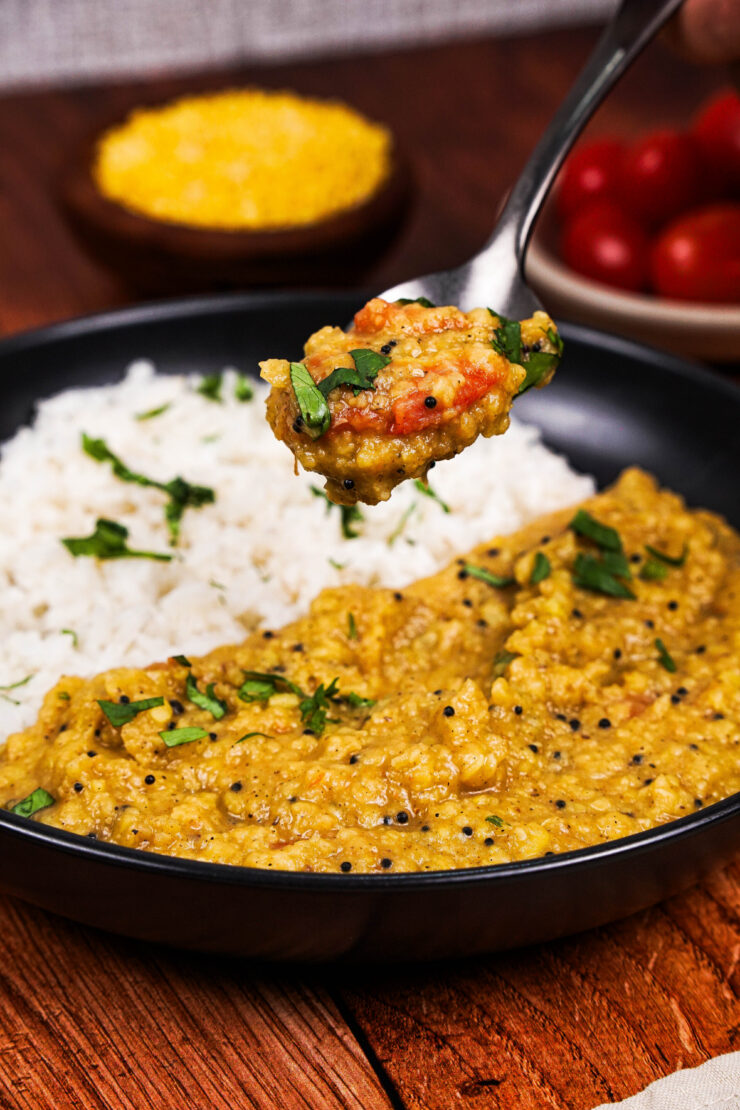
The goal of the recipe has always been to make dal in one pot. I’m a neat freak when it comes to cleaning and organization, so a fun fact about me is that I do not enjoy doing dishes.
With that in mind, for the first time, I tried this technique of making a tadka first and then adding the spices, lentil and coconut milk.
What is Tadka (Tempering)?
The tadka (also called tempering or chaunk) is when you bloom whole spices in hot oil to release their flavor before adding anything else. It is the foundation of South Indian cooking.
I like the deep flavor the dal gets when the tadka is added first. And in South Indian cooking, their signature technique for dal is to send the mustard seeds into the hot oil first, where they pop and release flavor before anything else goes in.
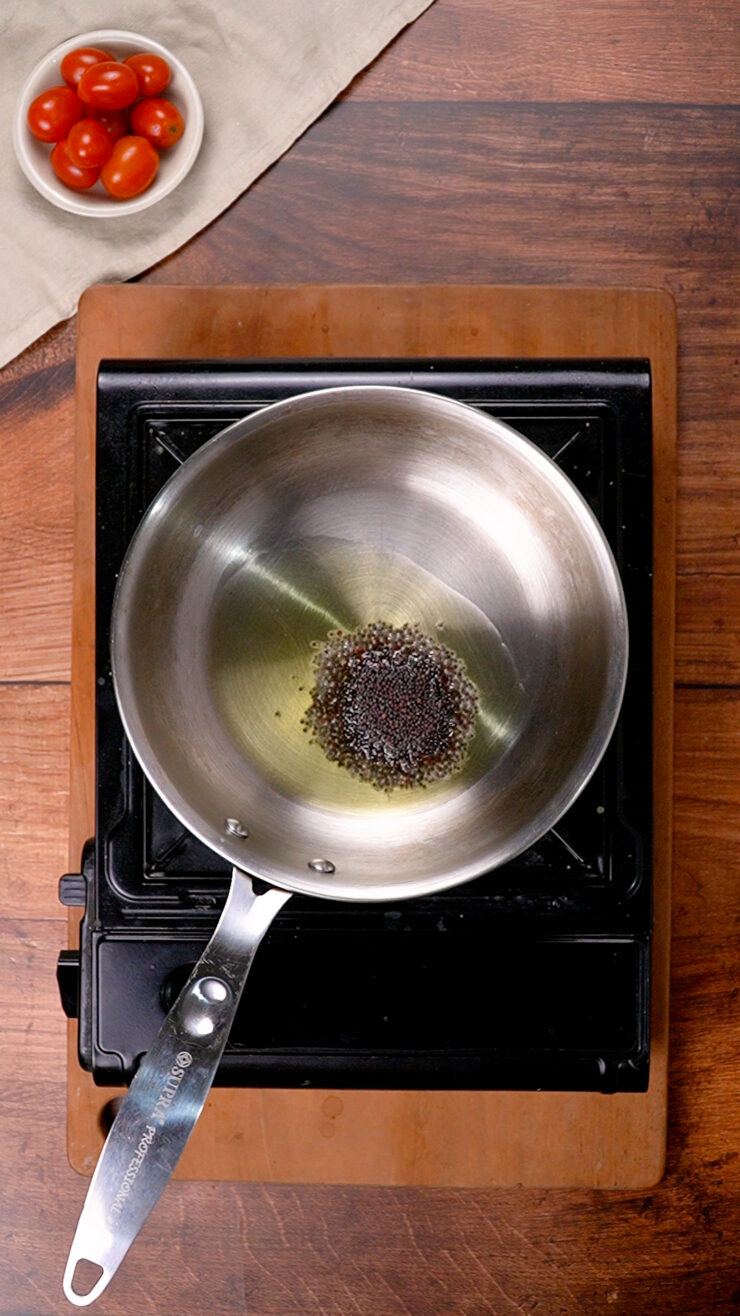
The tadka and spices get to marinate and bring out the full layers of subtle flavor while the lentils are cooking. When you add tadka last, you’ll get a bolder flavor instead.
Key Ingredients in This Recipe
- Red lentils are the main protein in this masoor dal recipe. They’re quick to cook and they easily give you a thick, creamy dal that’s enjoyable to eat. No wonder red dal recipes are becoming so popular!
- Coconut milk gives you the creaminess you want without weighing down the dal. It also adds some sweetness, which balances out the flavors.
- Vegetable stock boosts the flavor and is also full of good vitamins and minerals for us vegetarians.
- Tomato adds some much-needed tanginess, also keeping the dal recipe creamy.
- Garlic, ginger and onion add more flavor.
- Spices, including turmeric, cumin, coriander and mustard seeds, keep this an authentic dal recipe.
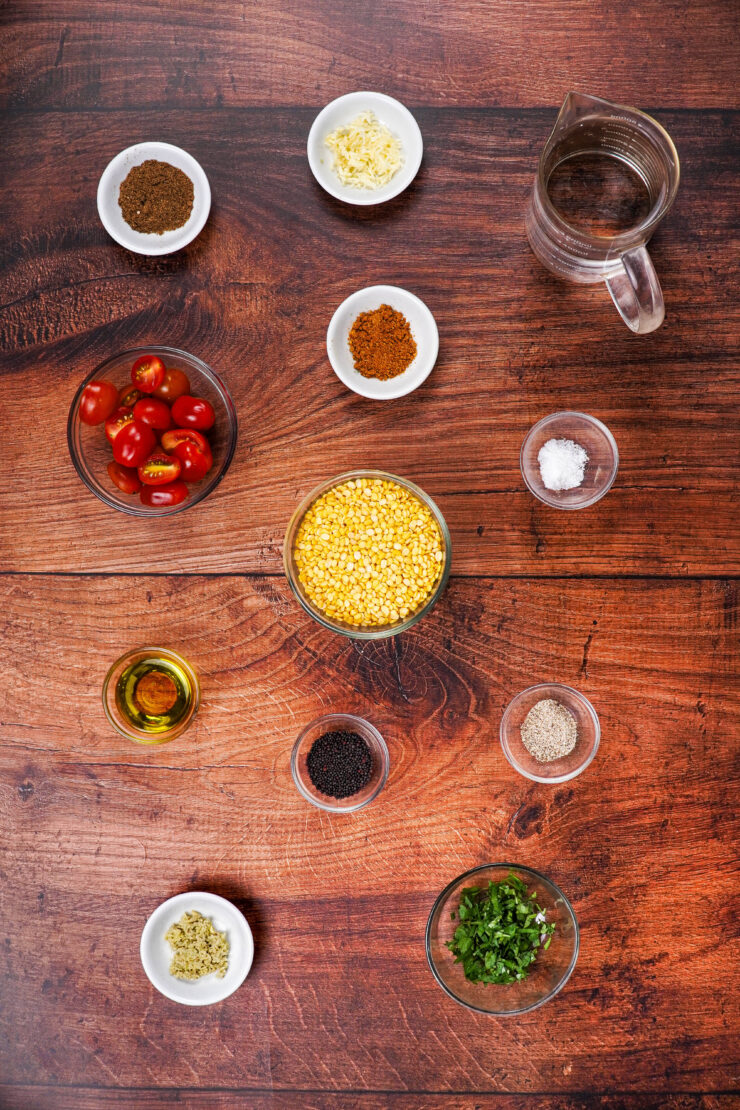
Step‑by‑Step Instructions
My South Indian dal recipe only requires one large pot. Begin by placing it over medium heat, adding the olive oil, onions, ginger and jalapeños, followed by a couple of pinches of salt.
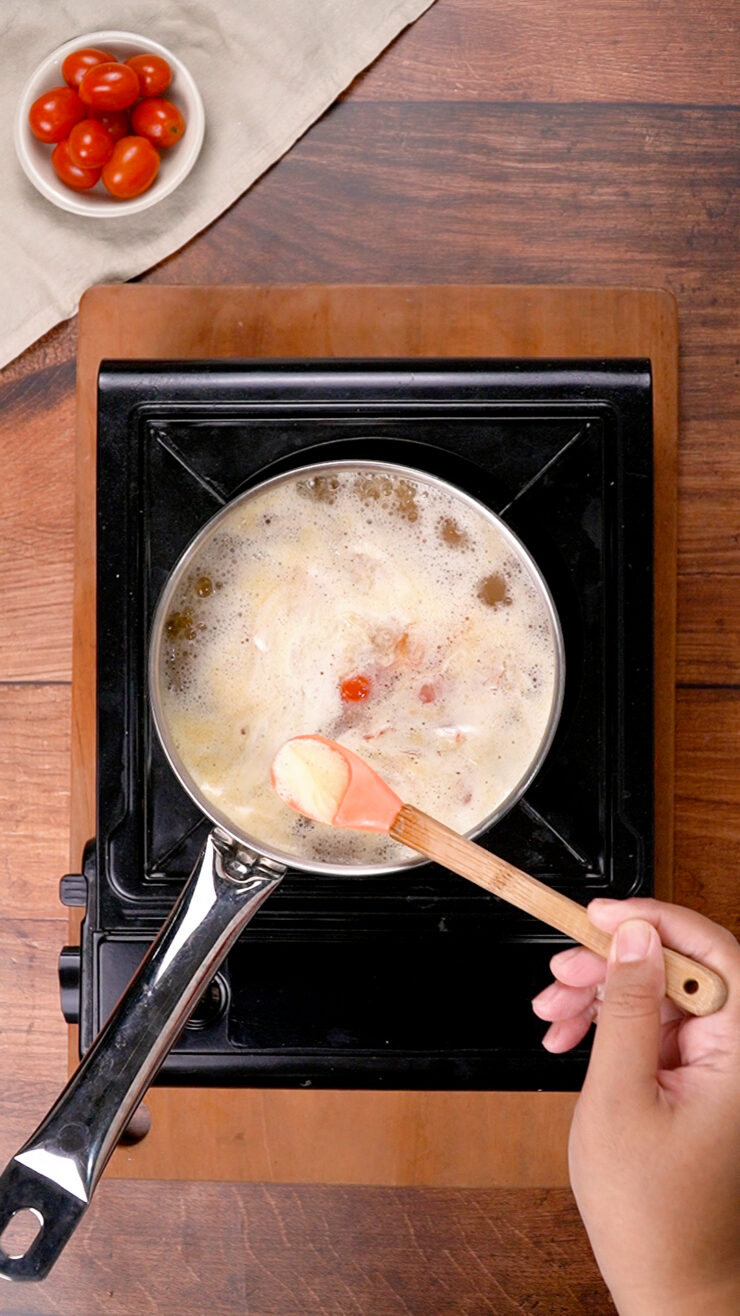
When the onions are fully cooked, it’s time to sprinkle in the curry leaves and mustard seeds. The mustard seeds will start to pop, which is your sign to add the remaining spices and garlic (until fragrant) and tomatoes (for another three minutes).
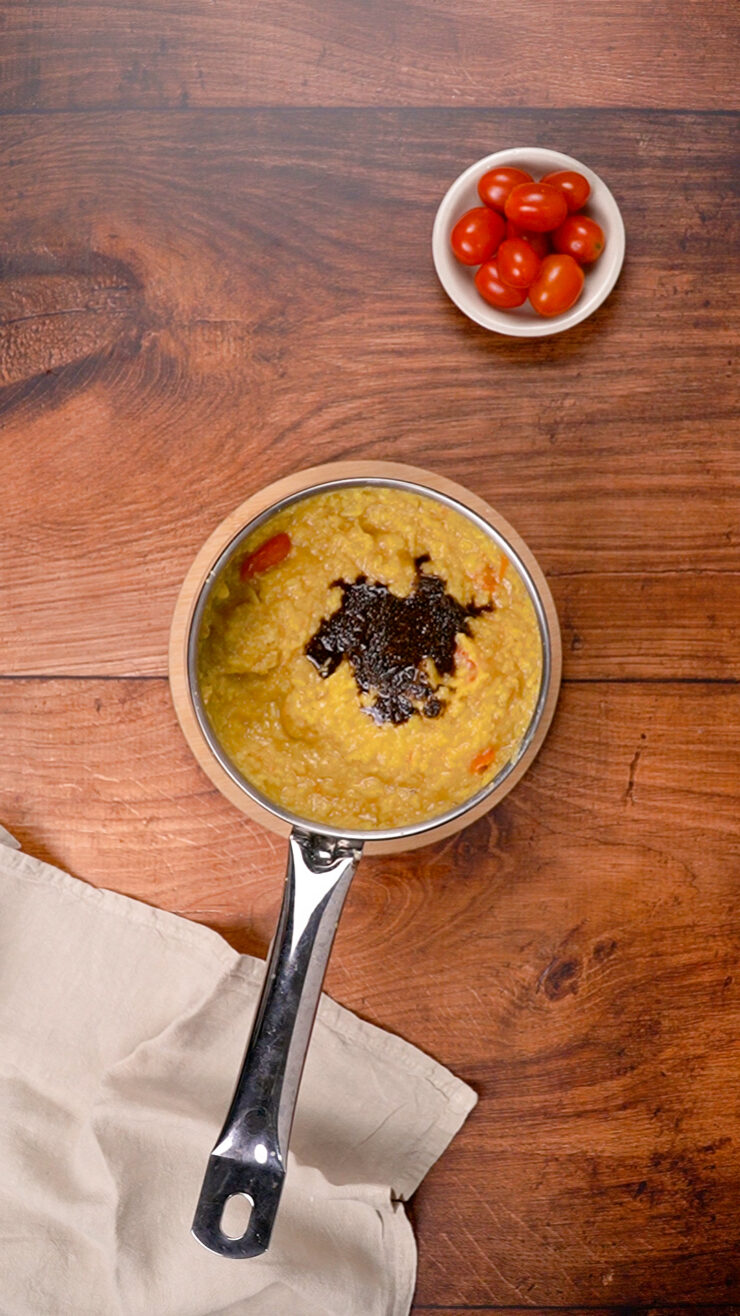
The final step is to pour in your lentils, vegetable stock and coconut milk, and bring to the boil. Once the bubbling kicks off, simply bring the heat down and let it simmer for around 20 minutes until the lentils collapse and you’re left with a creamy dal. You can add seasoning or a little bit of lemon here, before garnishing it with cilantro leaves.
Tips For Success and Common Variations
- Can I use toor dal instead of red lentils? Yes, but the cooking time increases – toor dal needs 30–40 minutes vs. 20 minutes for red lentils.
- No coconut milk? Heavy cream or oat cream works but changes the flavor significantly. For a lighter version, use extra vegetable stock.
- Adjusting heat: The jalapeño drives the spice. Remove the seeds for mild spice, keep for medium, add a second one for hot.
- Making it ahead: Dal thickens in the fridge. Add a splash of water or stock when reheating. Make sure you bring it to a full boil before serving, or else you’ll notice that the water stays separated from the dal.
Storage & Reheating
South Indian dal can be kept in an airtight container in the refrigerator for up to three days.
If you’d rather use it later on, you can freeze it instead (after letting it cool thoroughly), where it stays good for around three months.
Just remember, when you’re reheating the dal, add a little water or stock and bring it to a full boil for the best results.
Serving Suggestions
- The classic pairing is steamed basmati rice. This will give you the simplest and most authentic dal recipe.
- For bread, use vegan naan or roti. My vegan naan recipe is perfect for this.
- Upgrade your rice to pea pulao. This is great if you want something more festive – my pea pulao pairs with dal incredibly well.
- For a protein boost, serve alongside a paneer dish or roasted cauliflower. This will give you a fuller meal.
Nutritional Information
My South Indian dal recipe isn’t just tasty and packed with flavor. It’ll also keep you satisfied, with filling lentils, and around 235 calories per portion.
- Red lentils are a staple food in many countries including India. Lentils actually have a protein content of around 25%, making them a great plant-based protein. They have fiber and vitamins to round it off.
- Coconut milk is dairy-free and delicious. It also has vitamin C and iron.
- Tomatoes are a good source of vitamins C and K, potassium and folate.
- Jalapeños are best known for their kick, but did you know they also contain vitamin B6 and C, alongside others.
- Mustard seeds add yet more minerals and vitamins to this masoor dal recipe.
South Indian Dal Recipe — Red Lentil Dal with Coconut Milk
Ingredients
- 1 tablespoon olive oil
- 1 onion, diced
- 1 tablespoon grated ginger
- 1 jalapeño, de-seeded, finely chopped
- 2 tablespoons cilantro leaves, finely chopped (save some for garnishing)
- 6 leaves curry
- 1 teaspoon mustard seeds
- 2 teaspoons cumin powder
- 1 teaspoon coriander powder
- 1 teaspoon cinnamon powder
- 1 teaspoon turmeric powder
- 2 cloves garlic, finely chopped
- 1 tomato, finely chopped
- 1 cup red lentils
- 3 cups vegetable stock
- 1 cup coconut milk
- Salt and pepper, to taste
- 1 lemon, juiced
Instructions
- Place a large pot over medium heat.
- Add olive oil, onions, ginger, and jalapeño.
- Add a couple of pinches of salt then cook, stirring occasionally until the onions are fully cooked.
- Add curry leaves and mustard seeds.
- When mustard seeds start to pop, add the rest of the spices and garlic, then cook until fragrant.
- Add tomatoes and cook for an additional 3 minutes.
- Add lentils, stock, and coconut milk, and when bubbling starts, reduce heat to low.
- Let the dal bubble away until lentils collapse and dal becomes creamy (about 20 minutes).
- Taste and adjust seasonings as necessary, then add a squeeze of lemon.
- Garnish with cilantro leaves and serve with rice and naan.
BON APPÉTIT!
Nutrition
FAQs
Yes, this South Indian dal recipe uses red lentils (masoor dal). They cook faster and go creamy without soaking. Toor dal takes longer to cook.
Curry leaves and mustard seeds are what make a dal South Indian. Without them, you can still make a good dal, but just not the South Indian version. You can buy curry leaves at Indian grocery stores. North Indian dal variations include chana dal and Instant Pot dal makhani.
Yes, you can make this dal without coconut milk. To keep it a vegan dal recipe, substitute the coconut milk with oat cream. You can also use heavy cream. Both substitutions will change the flavor, but the recipe will still work.
There is no tamarind in this recipe. Instead, we use lemon juice to add tanginess.
Yes, you can add vegetables. Traditional options include spinach, drumstick (moringa), or bitter gourd. Make sure to add them in the final five minutes, or they’ll go soggy. My yellow moong dal is also a nice dal recipe that you can add more vegetables to.
You can make the dal creamy without blending it by cooking the red lentils until they fully collapse. Make sure to stir the dal well. Red lentils go naturally creamy without requiring the use of a blender.
Steamed rice is a classic accompaniment for South Indian dal. Vegan naan or pea pulao also work great.

Nutrition Disclaimer
Nutrition information is an estimate provided as a courtesy and may vary depending on ingredients used. This content is not intended as medical or dietary advice.

Ashish Patel
Hello, Awesome Article, and Your information about the south india style dal is very amazing and so much useful for me. Keep it up and thank you very much.:)
LKM
Very good, just what I was looking for! Made the recipe just as written (but doubled). Hubby and I both love it!
veggiecurean
so glad you enjoyed it.