
Vegan Pad Thai with Tamarind and Tofu
My vegan pad thai reminds me of the best pad thai I ever had. I still remember it. It was made by street vendors on the island of Ko Lanta in Thailand. A quick stir fry with fresh vegetables and spices and peanuts. No frills and yet so flavorful!
Back in the US, as a vegan, I just couldn’t find a restaurant with pad thai that even remotely compared to it. On top of that, restaurants almost always add fish sauce to pad thai.
So, I had to make vegetarian pad thai at home. I loaded it with vegetables just like I had in Ko Lanta and instead of using fish sauce, I brought in tamarind sauce and maple syrup for flavor. It not only looks great, but tastes amazing!

What Makes This Pad Thai Vegan?
I love pad thai but I’m hesitant to order it in a restaurant because traditional pad thai recipes usually use fish sauce to enhance the flavor. Mine uses tamarind sauce and maple syrup to enhance the flavors of this super-colorful dish instead.
I also don’t use egg, which is often scrambled into the wok in traditional pad thai recipes.
The Sauce: Tamarind Explained
What is the secret ingredient in pad thai? Well, it’s tamarind, a fruit found in Asia and Africa that’s used to add depth to all sorts of dishes from pad thai to curries and even chutneys.
The great thing about tamarind is that it has a really distinct flavor, almost sweet and sour but slightly caramel-like at the same time. Imagine the citrusy taste of lemon or lime, but much, much tangier!
Tamarind comes in several different forms:
- Tamarind sauce, which is the version I use in this recipe. It’s pre-made and already mixed with other ingredients like garlic, onion, sugar and spices. It’s both sweet and tangy, and perfect for vegan pad thai!
- Tamarind paste contains just tamarind and water. It’s often spooned directly into curry recipes or dressings.
- Tamarind concentrate is very thick, very sour and must be used very sparingly. It’s mostly used in slow-cooked curries or braised dishes.
For my pad thai, I also add tamari sauce to give the pad thai more depth and salt. Maple syrup is then essential to balance it out with some sweetness.
These are all products that you can buy at the grocery store. Gluten-free versions of tamari sauce can usually be found in the specialty gluten-free section. The rest of the ingredients, however, are all naturally gluten-free.
Ingredient Notes and Substitutions For My Vegan Pad Thai
- Wide rice noodles are used for pad thai and they’re rice-based, so they are naturally gluten-free. They do tend to clump together when you’re cooking them, but stirring them well will stop this from happening.
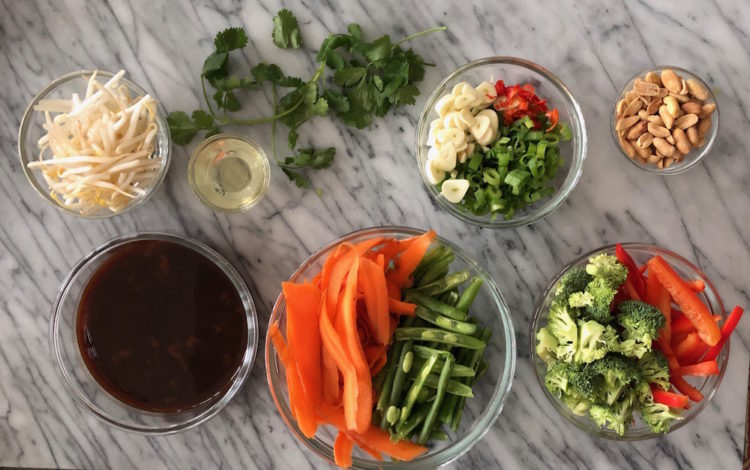
- Add any vegetable you want. I love adding broccoli, carrots and beans, but you could also use cauliflower or bok choy if you prefer their taste. The veggies just have to be crunchy.
- Baked tofu: I use store-bought baked tofu but you can absolutely bake your own tofu at home by pressing the excess water out of firm or extra-firm tofu, slicing it into cubes and baking it in the oven for 25 to 30 minutes coated in olive oil and your preferred spices.
- Peanuts: I use unsalted roasted peanuts. A pestle and mortar helps so that you can roughly pound them into pieces before adding them to the pad thai.
Tips For the Best Results
- Get the wok very hot before the oil goes in. It should be almost smoking! This helps to keep away moisture and turns out vegetables that are crunchy and not soggy.
- Keep the vegetables crunchy. On that note, crunchy vegetables are part of what makes pad thai so delicious. So, you’ll want to pick out veggies like broccoli and carrots that can provide a nice contrast to the soft wide rice noodles.
- Mix the sauce before you start cooking. Once you’ve added everything into the hot wok, you need to keep stirring constantly to avoid burning the ingredients. When you reach this stage, there’s no time to multi-task and make the sauce! So, before you heat the wok, make sure you have everything ready to go and have already whisked together the tamarind, tamari sauce, and maple syrup in a small bowl ready to be added after the veggies are cooked through.
- Toss the noodles in the sauce for only 1 to 2 minutes. If the rice noodles are left in the sauce in the wok too long, they’ll absorb too much liquid and turn mushy.
- Don’t skip the fresh cilantro. It adds brightness, freshness, aroma and a peppery flavor that balances out the other toppings. It’s a must!
Variations
To make my vegan pad thai recipe gluten-free, use gluten-free tamari and rice noodles. I already recommend wide rice noodles, as that’s what’s traditionally used in pad thai recipes. However, any type of rice noodle works for this recipe.
If you’re after a no-cook take on the same flavors, try out my pad thai salad bowl instead. It’s loaded with fresh vegetables and takes under 25 minutes to put together.
As a vegan, making sure that I have enough protein in my diet is really important. As in many of the best veggie stir fry recipes, I add tofu to my pad thai for a protein boost.
Some of my other favorite tofu stir fries are my veggie tofu stir fry with broccoli and snow peas and my broccoli tofu stir fry with peanut sauce, which is great if you want something a bit nuttier.
Make Ahead and Storage
I don’t recommend freezing vegetarian pad thai, but you can absolutely store your leftovers in an airtight container in the refrigerator for up to three days.
Before you slide it onto the nearest available shelf, just make sure that the pad thai has come down to room temperature first.
Once you’re ready to eat it again, you can reheat the leftovers in a pan or the microwave, and you’re all set.

Vegan Pad Thai with Tamarind and Tofu
Ingredients
- 7 oz wide rice noodles
- 2 tablespoons peanut oil
- 2 spring onions, (sliced)
- 2 cloves garlic, (finely sliced)
- 1 hot red chili, (finely sliced)
- 2 carrots, (shaved into ribbons)
- 1 handful large green beans, (cut diagonally)
- 1/2 head broccoli, (divided into florets)
- 1 red pepper, (finely sliced)
- 2 packs baked tofu
- 1/4 cup peanuts, (roasted, unsalted, roughly pounded in a pestle and mortar)
- 1/2 cup mung bean sprouts
- Fresh cilantro
- Lime, (for garnish)
- 5 tablespoons tamarind sauce
- 1/4 cup tamari sauce
- 2 tablespoons maple syrup
Instructions
- Prepare rice noodles according to the instructions on the packet, giving a good stir to prevent them from clumping together and sticking to the bottom of the pot.
- Drain noodles and set aside.
- In a small bowl, whisk together tamarind, tamari sauce, and maple syrup.
- Heat a wok.
- Pour 1 tablespoon oil and heat up until almost smoking.
- Add spring onions, garlic, and chili.
- Stir-fry, stirring constantly, until spring onions soften and garlic becomes fragrant.
- Add prepared broccoli, green beans, red pepper, and carrot ribbons, then stir-fry until cooked yet still crunchy.
- Add tofu, then add sauce and noodles. They may have clumped together slightly but the sauce and heat of the wok will separate them again.
- Mix everything well, stirring the whole time, for 1-2 minutes.
- Divide between 4 plates and sprinkle with sprouts, cilantro, and crushed peanuts.
- Serve with lime wedges on the side.
Bon appétit!
Nutrition
FAQs
Vegan pad thai uses rice noodles, tofu, vegetables and a tamarind-based sauce. The tamarind sauce replaces fish sauce, which is what gives traditional pad thai recipes their flavor. You’ll also want to make sure not to add egg to your pad thai.
The secret ingredient in pad thai is tamarind. This fruit is what gives the dish its iconic sweet and sour base. For this recipe, we use tamarind sauce rather than paste or concentrate.
This dish can be made with any type of rice noodle, whether it’s wide rice noodles or vermicelli noodles.
My veggie pad thai recipe can be made gluten-free by using gluten-free tamari. It already uses wide rice noodles, which are naturally gluten-free.
Yes. Peanuts are a delicious nutty topping that complements all of the sweet and tangy flavors in the pad thai. However, if you’re allergic or don’t have them on hand, you can still make pad thai without peanuts.
Pad thai lasts for up to three days in the refrigerator. Store it in an airtight container after waiting for the leftovers to cool to room temperature.

Nutrition Disclaimer
Nutrition information is an estimate provided as a courtesy and may vary depending on ingredients used. This content is not intended as medical or dietary advice.

