Simple Vegetarian Soup Recipes for Quick and Nutritious Meals
There’s nothing better than a steaming hot bowl of soup when you’ve just returned from work, school, or running errands. And there’s also nothing worse than realising that you don’t have any go-to simple vegetarian soup recipes.
I know what it’s like to want a nutritious meal, but fast, so I’ve rounded up my absolute favourite quick vegetarian soup recipes, from Mexican broths with beans to hearty lentil-based soups and classic combinations like broccoli, carrot and ginger. I’ve also organised them into two main sections – lentil-based soups and recipes with beans – to make it easy for you to pick out your favourite flavors, textures and proteins.
Like many of my recipes on Veggiecurean, all of these veggie soup recipes can be batch-cooked in a big pot to freeze and served throughout the week. Whether you’re a busy parent, professional or student trying to squeeze out a healthy meal in a short amount of time, these are for you.
Making Simple Vegetarian Soup Recipes at Home
I love soups, firstly because they’re a one-bowl meal. You get flavor, nutrients and protein from one single recipe, and there’s no need to fuss around with multiple pots and pans because most soups are made by incrementally adding ingredients to one big pot.
Although I like to keep my soups as clean and simple as possible, they’re also incredibly versatile. Vegetarian soup recipes range from light broths to hearty stews, and use ingredients like lentils, beans, root vegetables and coconut milk for rich plant-based flavors. For protein, some people like to blend tofu into their recipe, but I prefer to add beans or lentils.
The real key to a really good soup is a flavorful base. Homemade is best, but if you’re particularly short on time, you can buy a pre-made broth. My go-to is the Pacific Foods organic vegetable broth.
Soup recipes are also a dream for meal preppers. I love making my soups in one big batch. That way, I can either store the leftovers in the refrigerator for a day or two and re-serve, or transfer them to my freezer where they’ll stay good for up to three months. They defrost easily in the refrigerator within about 4 – 5 hours, so you can take them out to defrost in the morning and have dinner ready to reheat by the evening.
Vegetarian Lentil-Based Soups
If you like your soups with a lentil base, try these delicious and filling vegetarian lentil-based soup recipes for your next lunch or dinner.
Healthy Lentil Soup
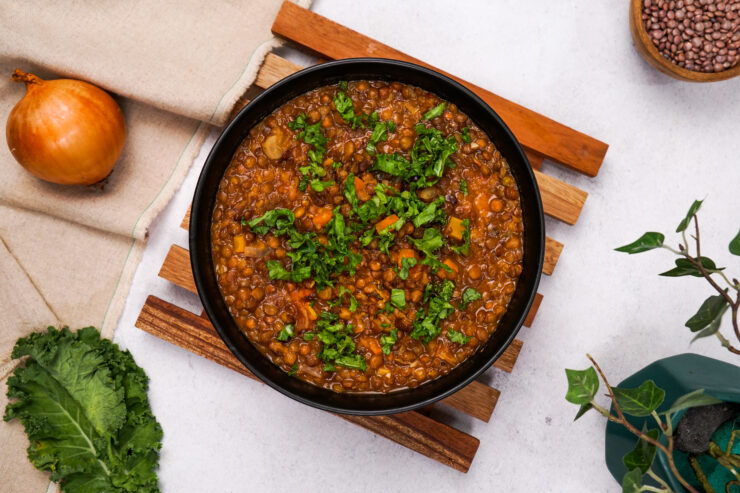
Packed with a medley of mouthwatering spices, filling lentils, carrots and tomatoes, my healthy lentil soup with cumin should keep you full for hours. There are no complicated ingredients or methods here, just spices and veggies that you’ll probably already have in your kitchen.
This recipe has a lovely chunky-pureed consistency, so it freezes fabulously and doesn’t lose any of its texture. For all of the details, read my healthy lentil soup recipe.
Yellow Lentil Soup
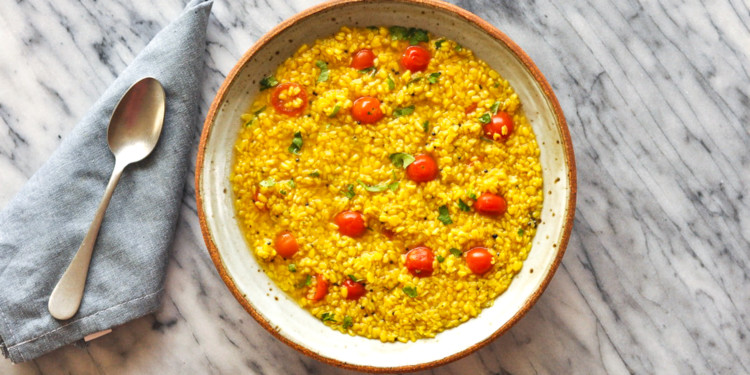
Who said all lentil soups have to taste the same? My yellow dal soup recipe is totally different from the recipe above with cumin. It’s much lighter, with ginger, garlic, curry powder, garam masala and grape tomatoes. Most of the protein comes from the yellow moong dal, a type of quick-cooking yellow lentils.
This is one of my go-to quick and easy vegetarian soup recipes. We often make a huge bowl for dinner when we return from vacation. You can serve it with naan if it feels too light for a full meal. For the full method, visit my yellow lentil soup recipe.
Vegetarian Soups With Beans
Many vegetarian soup recipes incorporate beans to add texture, taste and keep you full for longer. The following recipes are some of my favourite hearty vegetarian soup recipes.
One-Pot Mexican Soup
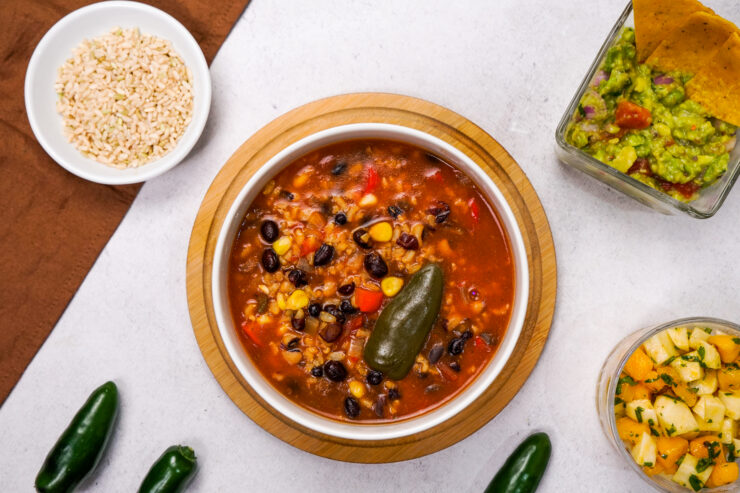
If you like a spicy soup that’s bursting with flavor, you’ll probably love my one-pot Mexican soup. It’s full of classic Mexican ingredients, including black beans, pinto beans, jalapeno, tomatoes, bell peppers and cumin. The recipe uses leftover brown rice, so it’s a soup that you can quickly throw together using the previous dinner’s leftovers.
This recipe can be made using an Instant Pot or your stovetop. View the full details for my Mexican soup recipe to see exactly which ingredients you’ll need and my favorite garnishes like cilantro, tortilla chips and sliced avocado.
Black Bean and Corn Soup
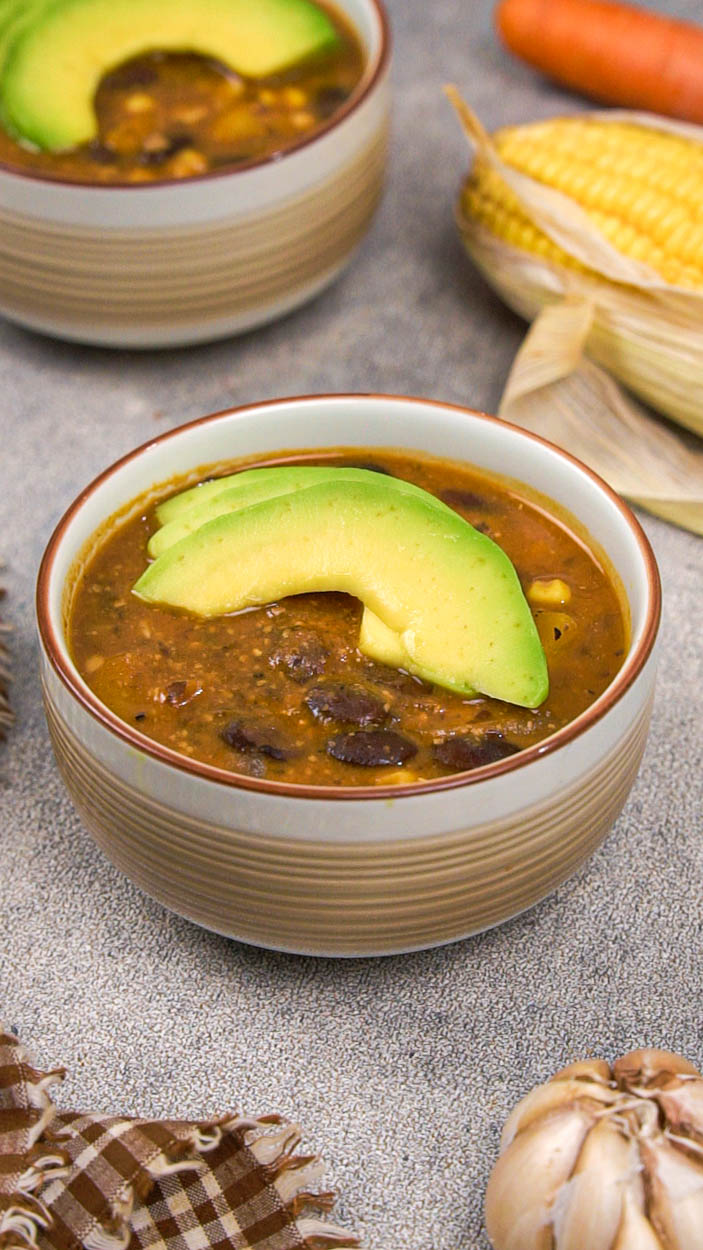
For Mexican flavors and a bowl of soup that’ll please the whole family, try out my black bean and corn soup. This has to be one of the best vegan soup recipes my kitchen has seen; it’s packed with nutritious vegetables like onion, carrots, tomatoes and corn, with canned black beans for protein and avocado as a topping.
If you’re keen to experiment with the consistency, other beans like chickpeas or kidney beans will also work well. Read my black bean and corn soup recipe to find out how to make it yourself.
Broccoli and Carrot Soup
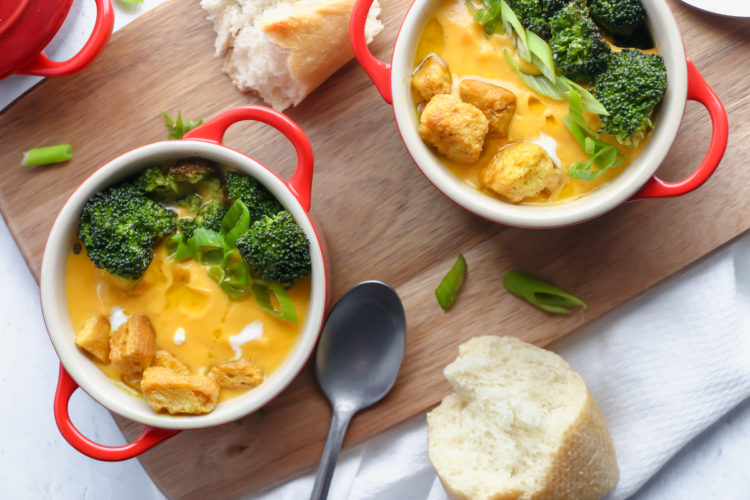
Looking for a creamy vegan soup recipe? This is it. My broccoli and carrot soup is a smooth, rich dish made with carrots, white beans, broccoli and coconut milk. It’s incredible what you can achieve without dairy!
The soup features ginger, a known anti-inflammatory, so it’s a great recipe to serve if you’ve got a family member who’s feeling under the weather. And all you need is one pot and a blender or food processor! For all of the finer details, visit my full broccoli and carrot soup recipe.
Tips, Variations, and Customizations
Vegetarian soups are highly adaptable. You can experiment as much or as little as you like. Try increasing the protein content, changing the texture or swapping out one vegetable for another:
- Add a different protein: I like to use beans or lentils for protein in my vegetarian soup recipes. However, you can also blend tofu and add it to the soup (cooking it for an additional five minutes) to really boost the protein content. Remember, you can always experiment with the type of bean or lentil, too. White beans are creamier and milder than black beans, which are best reserved for heartier and spicier soups.
- Use a different base: The key to a flavorful soup is the base. You can take complete control over the flavor by making your base from scratch or speed up the recipe by using a store-brought base. I really like the Pacific Foods organic vegetable broth.
- Experiment with garnishes: Toppings can seriously make or break a soup recipe. You can add crunch by topping the soup with tortillas (for Mexican recipes) or leafy greens (for lighter broths) or boost the nutritional content or flavor by adding ingredients like avocado, fresh herbs, croutons, or lemon.
- Alter the flavor by stirring in spices or last-minute ingredients: If your soup tastes too spicy, you can make it milder by stirring in coconut cream or greek yogurt. And if it doesn’t have enough flavor, you can add more salt, pepper, spices, lemon juice, soy sauce or hot sauce depending on the recipe.
Storage, Make-Ahead, Use Cases
These vegetarian soups recipes are all ideal for batch-cooking and storage. Store any leftovers in an airtight container in the fridge for a day or two. The sooner you use the leftovers, the fresher they’ll taste.
If you’re not ready to use up your soup in the coming days, that’s okay too. Once the soup has cooled down, you can transfer them to the freezer, where they’ll last for up to three months.
When you’re ready for a bowl of soup, it can be tempting to reheat the soup from frozen. However, that’ll often result in a mushy soup and can cause some parts of the soup to overcook or undercook. Instead, I recommend transferring the frozen soup to your fridge and letting it defrost for 4 -5 hours. Then you’re ready to serve!
If you’re preparing to batch-cook your soup, you can also prepare and chop the ingredients ahead of time. Then, when you come to cooking, all you need to do is add the ingredients to the pot as per the recipe and watch over them as they cook.
Check out my other Soup Salad Recipes.
FAQs About This Topic
For a weeknight dinner, you’ll want something that’s quick and easy to whip up. Ideally, the soup can be made in one pot, like my healthy lentil soup recipe with cumin or my yellow lentil soup recipe. Both of these recipes are super quick because you just add all of the ingredients to one pot, let them cook. Better yet, there’s only one pot to wash up afterwards.
There’s a common misconception that vegetarian soups aren’t high in protein. However, you can make any soup recipe high protein by simply adding tofu to the soup and cooking it for an additional five minutes. Beans and lentils are other good sources of protein and a common ingredient in high protein vegetarian soups.
All of my vegetarian soup recipes can be meal prepped and saved for later throughout the week. If you want, you can batch cook the soup recipe, and then freeze them. Later, they’ll only need to be defrosted and reheated.
You don’t need dairy to make a vegetarian soup creamier. You can boost creaminess by adding nutritional yeast to the recipe; my favourite nut-free option is the Bragg nutritional yeast. If you don’t want to use nutritional yeast, you could try soaking some cashews in water for 4-6 hours and then blending them to make a paste. These can be added to the soup (and cooked for an additional two minutes) for a creamy texture.
If you find that your vegetarian soup recipes aren’t quite flavorful enough, the easiest fix is to try different seasonings or a new soup base. My favourite vegetable broth is the Pacific Foods organic vegetable broth. Seasonings must fit with the recipe, but common ones that can boost flavor include smoked paprika, cumin, coriander or turmeric. You can also experiment with stirring in fresh herbs or lemon juice.
Homemade vegetarian soups will last 3-4 days in the refrigerator. Make sure to store them in an air-tight container to keep them fresh and prevent them from spoiling too soon.
Vegetarian soups can be stored in the freezer for up to three months before they spoil. They’re best defrosted in the refrigerator, but if you’re short on time, you can use the defrost setting on your microwave.

Nutrition Disclaimer
Nutrition information is an estimate provided as a courtesy and may vary depending on ingredients used. This content is not intended as medical or dietary advice.