
Vegan Miso Soup with Tofu and Vegetables
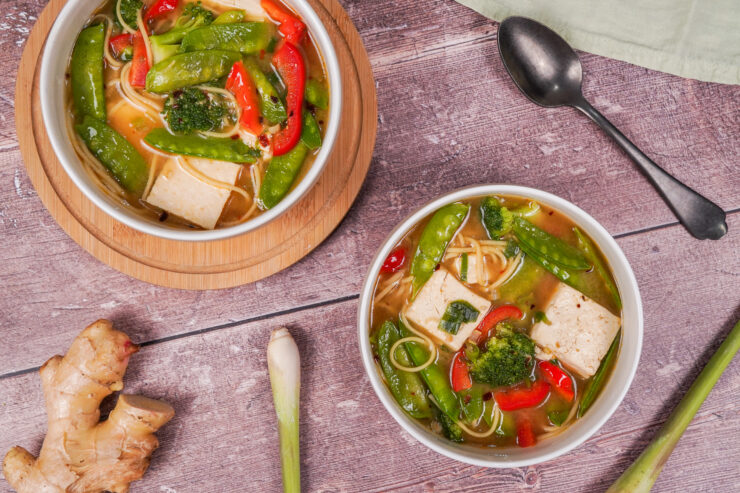
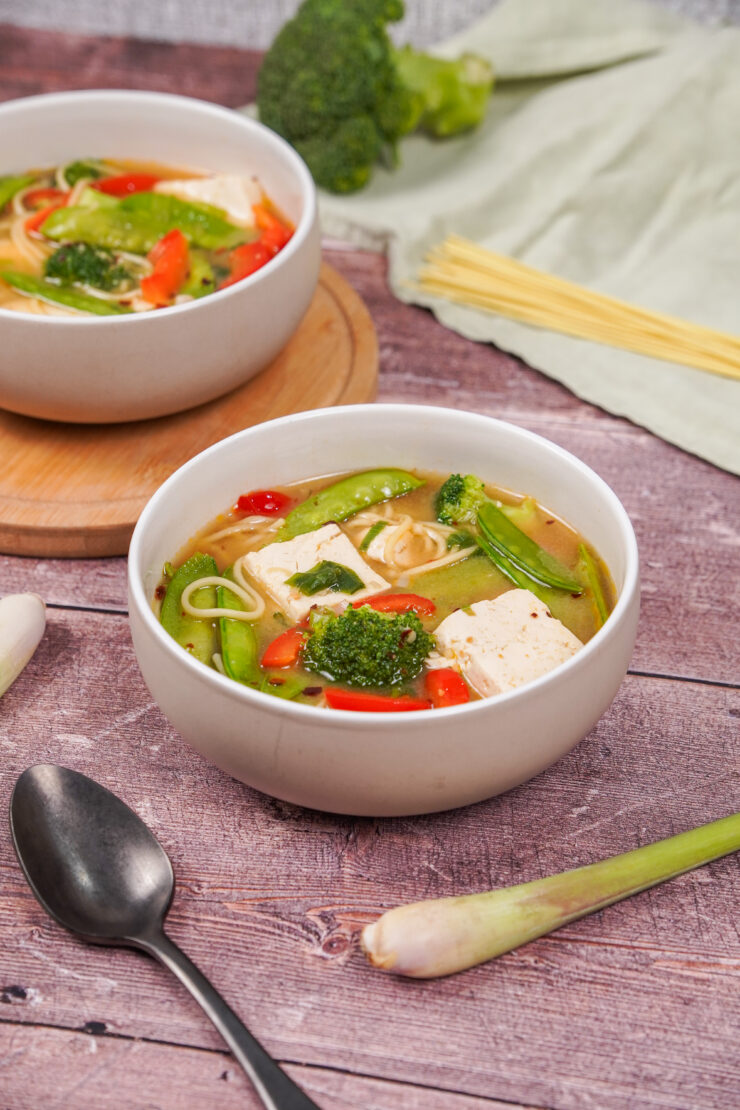
My vegan miso soup with tofu is loaded with broccoli, snow peas, and noodles in a lemongrass-ginger broth.
Miso paste is the star ingredient: earthy, sweet, salty, tangy and creamy all at once.
I was first introduced to miso during a visit to Kyoto, Japan, in 2018. Kyoto is a land of temples, and has many, many Buddhist temple restaurants that serve vegan meals.
The base for broths and curries in Japan is miso, which is made by fermenting soybeans with salt and koji (a mold). It adds a deep umami flavor that can instantly give a dish a full-body texture without the creaminess of coconut milk.
After my second trip to Japan (skiing in Niseko in December 2024), I returned home and bought some miso from H Mart.
I began experimenting and decided to pair the Japanese recipe with subtle Southeast Asian flavors, the woodiness of ginger and the floral and citrus notes of lemongrass.
The result is this delicious vegetable miso soup with tofu, garnished with dried mushroom – one simple trick I learned in Japan, used all over the country to boost the earthy flavors.
Why You’ll Love This Vegan Miso Soup Recipe
- It’s a quick 20-minute weeknight dinner. Similarly to my veggie ramen recipe with mirin, this soup has become a go-to meal on a cold and rainy weekday evening. I’ll make it when I want something quick and warm that’ll warm up the soul and body.
- It’s high in protein. I’m always trying to find ways to add more protein to my meals, and being vegan, it’s not always easy. On my last trip to H Mart, I discovered tofu noodles and decided to give it a try. I really liked it. Combined with the extra firm tofu, you get a double-protein boost!
- You can leave out the oil. The sesame oil is optional in this tofu miso soup recipe, so it’s ideal if you’re trying to eat less oil.
- The veggies are customizable. I use red pepper, snow peas and broccoli florets, but bok choy, carrots, and water chestnuts all work great for this dish.
Ingredient Breakdown
Here’s a little bit about some of the main ingredients, and how to choose your miso paste and noodle types, plus decide between fresh vs dried lemongrass!
- Miso paste: For this recipe, I’m using white (shiro) miso – it’s the mildest and sweetest. Yellow miso also works well (and make sure to save some for my crunchy miso bok choy recipe). Red miso is stronger and saltier, so make sure you reduce the amount if you’re substituting with red miso.
- Lemongrass: Fresh minced lemongrass is best, but you can use half a teaspoon of lemongrass paste or one teaspoon dried lemongrass if you don’t have any on hand.
- Tofu noodles: I’ve gone ahead and used tofu noodles for the extra protein, but you can easily substitute these with cooked soba noodles if you have a preference.
- Tofu: Putting tofu in vegetable miso soup is an easy way to add protein, especially if you’re vegan like me. We want to use extra-firm tofu that’s been drained and cubed. For the best taste, boil the tofu in salt water for two minutes before draining – an easy flavor/texture boost!
- Heavy veggies: Combined with the tofu, they make this vegetarian miso soup into a substantial meal instead of a light starter.
- Dried mushroom: Dried porcini is best.
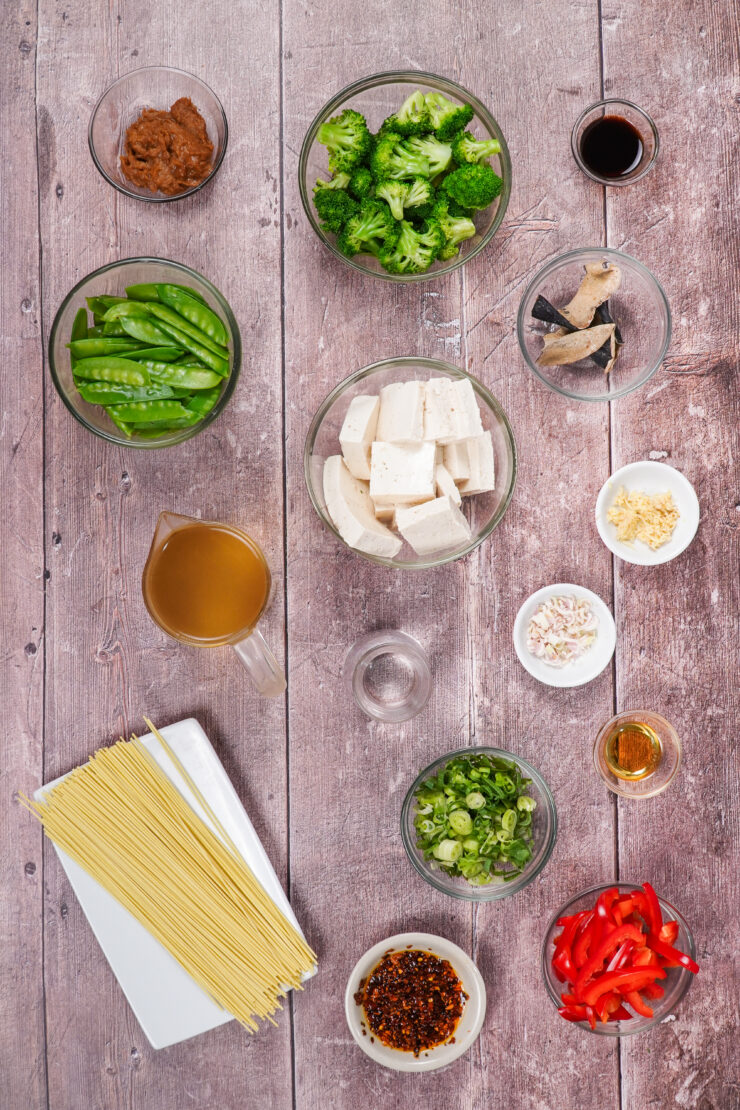
Step-by-Step Instructions For My Tofu Miso Soup Recipe
1. Build The Broth
The first part involves building the vegetarian miso soup broth, which is honestly pretty easy. We just bring the water and vegetable broth to a boil, before dropping in the ginger, green onions and lemongrass. They only need to simmer for about 2–3 minutes.
2. Tempering the Miso
Next up is tempering the miso. It sounds complicated, but it’s really not. I transfer half a cup of the broth to a small bowl and then whisk in the miso paste until it reaches a really nice smooth consistency, and that’s it done.
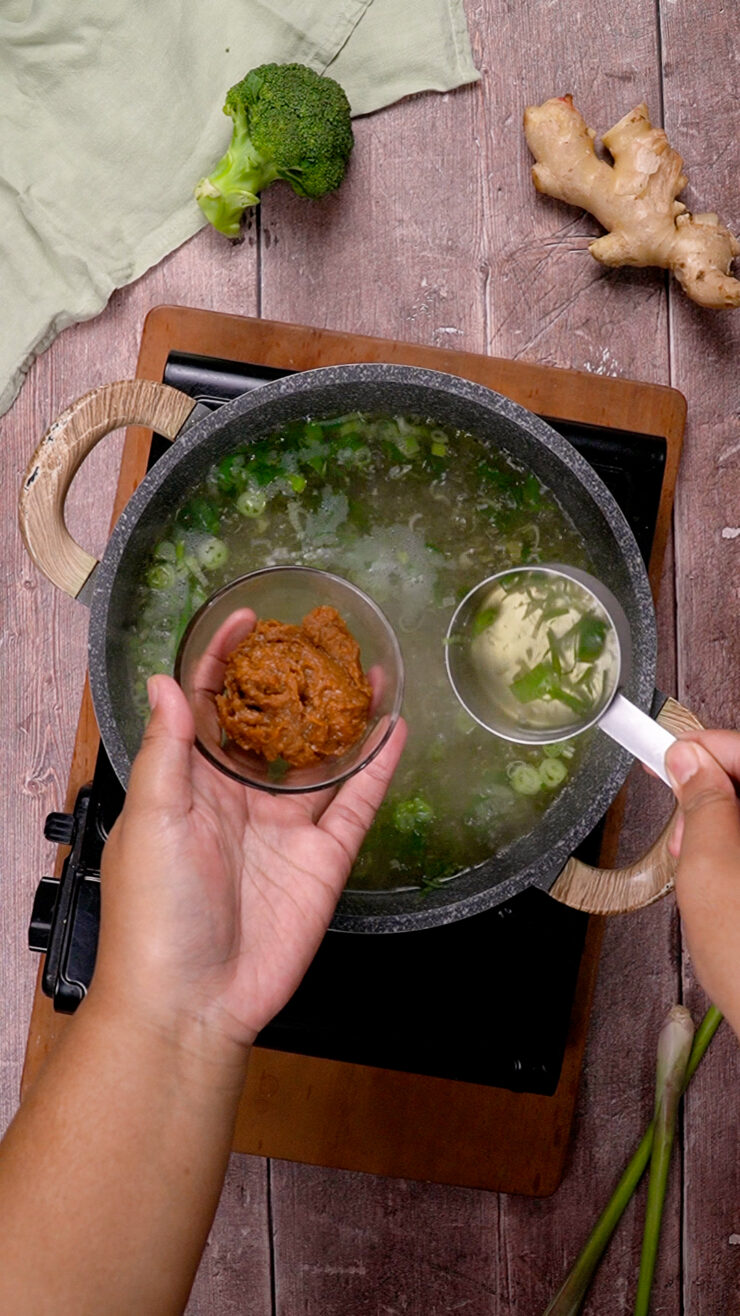
3. Add The Noodles, Tofu and Miso Soup Vegetables
The final step is just adding in the veggies, noodles and tofu. I’ll start with the noodles and tofu, letting them simmer for about three minutes, and then add the vegetables and letting those simmer for one minute.
Before I stir in the miso-broth mixture, I’ll reduce the heat to low. Once it’s added, I’ll turn off the heat completely and add some sesame oil (optional), soy sauce/tamari and chili flakes (also optional but great for some added heat). The finely grated dried mushroom comes last.
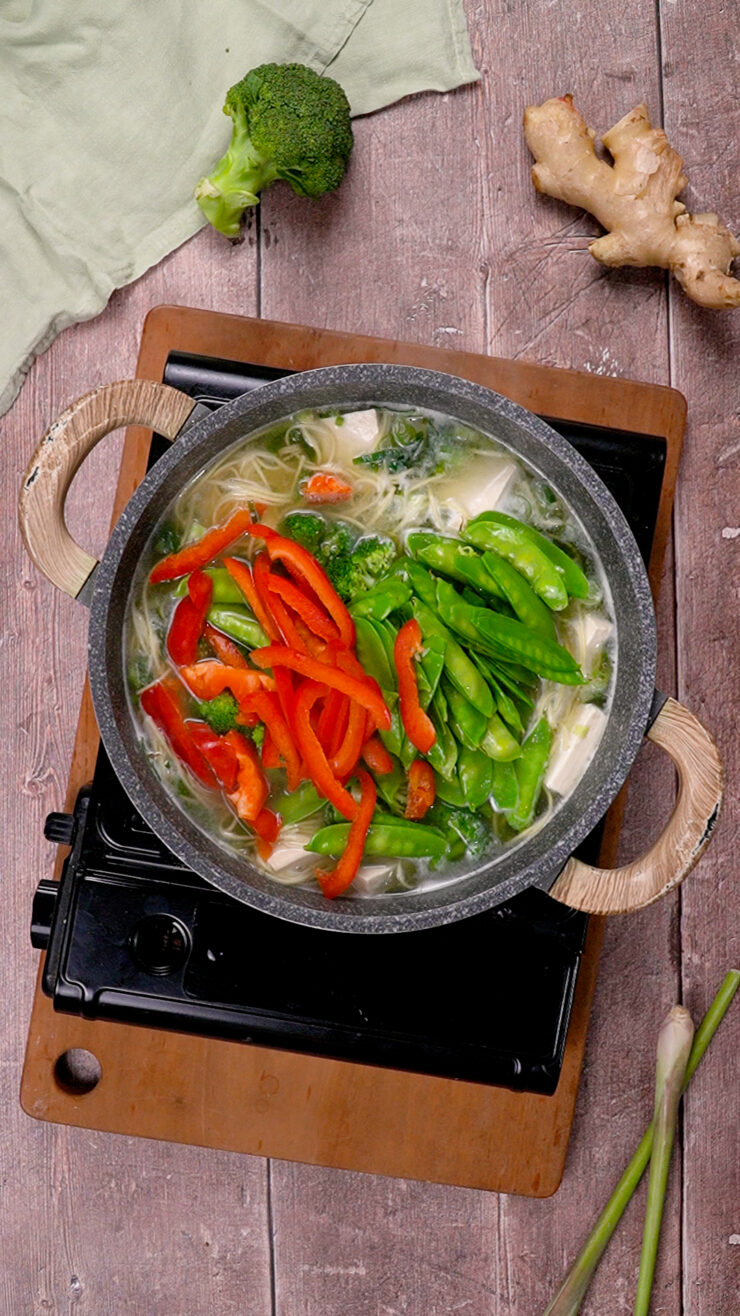
Pro Tips For Making Vegan Miso Soup with Tofu and Vegetables
1. Never boil the miso
The reason I reduce the heat so dramatically before adding the miso is because boiling miso kills all of those healthy probiotics that we want.
On top of that, boiling miso dulls the flavor. Often, I’ll remove the pot from the stovetop completely before adding the miso just to be sure it’s not too hot for the miso.
2. Blanch the veggies ahead of time
Up to 24 hours before making the recipe, I like to blanch the vegetables and store them in ice water in the fridge. This makes sure that they come out nice and tender.
When making vegetable miso soup, it’s easy to undercook veggies because we want to keep the heat low to avoid dulling the flavor of the miso.
3. Garnish with dried mushrooms
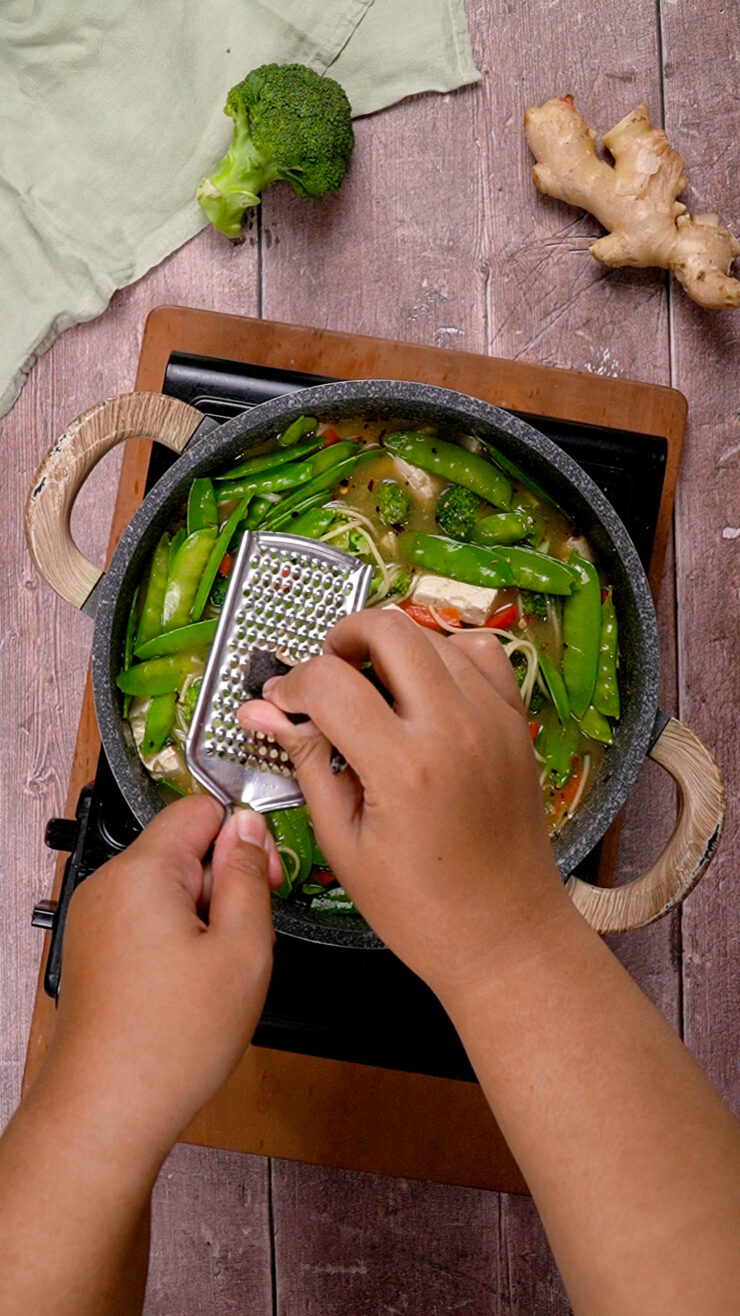
One more thing I learned over my two trips to Japan is that grating mushrooms into miso soup enhances the umami profile and gives the soup a deep savory and earthy flavor. It’s a super simple trick, and this is how they do it in Japan!
Variations and Serving Suggestions
There are so many ways you can serve and customize miso soup with tofu:
- Try out some different veggie combos: Bok bhoy, carrots, water chestnuts. They all work in this dish!
- Swap out the noodles. Instead of tofu noodles, you could use soba noodles. Traditionally, miso soup is made with either soba noodles or hearty udon noodles.
- Serve the miso soup with rice. You don’t have to stick to the rulebook every time. You can keep it simple with steamed white rice. For a more chewy texture, you could also try adding brown rice to the soup itself.
Storage & Meal Prep
Miso soup with tofu is best eaten fresh from the stove. Storing miso soup in the fridge is possible, but I don’t recommend it because miso is a fermented ingredient and the health benefits and flavor can totally change when kept cold.
You can still meal prep some aspects of the soup in advance, though. Veggies can be blanched up to 24 hours ahead, and then stored in ice water in the fridge ready to add to the soup the next day.
Nutritional Information
My vegan miso soup is high in protein and low in fat and calories, but still substantial enough for a filling dinner.
So, if you’re wondering whether miso soup with tofu is good for you, here’s your answer:
- Miso has probiotic benefits, which helps to contribute towards a healthy gut.
- Tofu is a great plant-based source of protein and nutrient dense, with calcium and other vitamins and minerals. If you’re looking for more healthy tofu recipes, I recommend my ginger tofu bites or mouthwatering tofu with green vegetables!
- Ginger and lemongrass both contain anti-inflammatory properties.
- Broccoli florets contain vitamins C, K and B9 (folate).
- Snow peas offer fiber and a nice range of vitamins.
- Red pepper is high in vitamin C.
Vegan Miso Soup with Tofu and Vegetables
Ingredients
Broth
- 3 cups vegetable broth
- 1 cup water
- 1 bunch green onions, whites thinly sliced
- 1 tbsp fresh ginger, grated
- 1 tsp lemongrass, minced (or ½ tsp lemongrass paste, or 1 tsp dried)
Protein
- 3.5 oz tofu noodles, drained (or substitute cooked soba noodles)
- 14 oz extra firm tofu, drained and cubed (optional: boil in salt water 2 min, drain)
Vegetables
- 2 cups broccoli florets, blanched
- 1 cup snow peas, blanched
- 1 red pepper, thinly sliced
Miso Base
- 1/4 cup white miso paste
Additions
- 2 tbsp sesame oil, optional
- 1 tbsp soy sauce or tamari
- 1 pinch red chili flakes or drizzle of chili oil, optional
- Dried mushroom , for garnish (porcini recommended)
Instructions
- Bring broth and water to a boil. Add ginger, green onions, and lemongrass. Simmer 2–3 minutes.
- Transfer ½ cup broth to a small bowl and whisk in the miso paste until smooth.
- Add noodles and tofu to the pot. Simmer 3 minutes.
- Add vegetables and simmer 1 minute. Reduce heat to low.
- Stir in the miso-broth mixture.
- Turn off heat. Add sesame oil (if using), soy sauce/tamari, and chili flakes (if using).
- Taste and adjust seasoning. Top with finely grated dried mushroom.
- Cover and rest 5 minutes before serving.
Notes
- White miso is recommended, but any miso paste works.
- Swap veggies freely — bok choy, carrots, and water chestnuts all work great.
- No noodles? Serve with steamed rice.
- Blanch hearty veggies ahead of time and store in ice water in the fridge for up to 24 hours.
Nutrition
FAQs
White (shiro) miso is recommended for this miso soup recipe with tofu – it’s the mildest and sweetest. Yellow miso also works. Red miso is stronger and saltier, so reduce the amount if substituting.
Absolutely. Skip the noodles and serve the soup with steamed rice on the side instead.
This recipe uses broccoli, snow peas, and red pepper, but bok choy, carrots, spinach, and sliced water chestnuts are all great options.
Boiling miso can destroy its probiotic benefits and dull the flavor. Always add miso after removing the pot from heat or at a very low simmer.
Yes! Blanch the hearty vegetables and store them in ice water in the fridge for up to 24 hours before making the soup.
Use tamari instead of soy sauce and choose gluten-free noodles (like rice noodles or zucchini noodles) to make it gluten-free.
The combination of miso paste, soy sauce/tamari, and the grated dried porcini mushroom garnish creates layers of umami.

Nutrition Disclaimer
Nutrition information is an estimate provided as a courtesy and may vary depending on ingredients used. This content is not intended as medical or dietary advice.