Best Veggie Stir Fry Recipes for Quick and Easy Meals
If you’re busy during the week or just want healthy meals packed with protein and colorful veggies, you’ll find plenty of great stir fry recipes here, plus helpful tips. We’ve all had those nights when dinner isn’t planned and we need something quick. Stir fries are perfect for that—they cook fast, use just one pan or wok, and work with whatever fresh veggies and protein you have on hand.
You’ll find a variety of vegan stir fry recipes here, many with Asian-inspired flavors like curry, peanut sauce, soy sauce, and gochujang. You’ll also see how to mix and match different veggies and proteins, and how to adjust the recipes to fit your tastes and what you have available. Here’s everything you need to make a delicious vegan veggie stir fry.
If you’re looking for even more ideas beyond stir fries, you can also explore our main dinner page for more quick and easy vegan dinners.
Making Stir Fry Recipes at Home
All you need for a tasty veggie stir fry is a good sauce, some vegetables, and tofu. It’s a great choice for a weeknight dinner because it’s packed with flavor, full of veggies, and cooks quickly on the stove. Just heat some oil, add your ingredients, and cook everything quickly.
Having your ingredients ready before you begin cooking is essential, as the process moves very fast over high heat. For stir fries, generally, you want the vegetables you use to have a tender‑crisp texture and bright colors, meaning that you don’t have to cook them for very long. You should slice harder‑to‑cook vegetables like carrots very thinly or cut them into matchsticks to ensure they cook at the same time as more tender vegetables.
Any vegan veggie stir fry recipe is a great clean‑out‑the‑fridge meal, as you can throw in almost any uncooked vegetables that you need to use up. Stir fries can also be a good place to use leftover cooked vegetables, provided you add them later in the cooking process, just so that they warm through.
A good sauce is what makes a stir fry really stand out and can make it taste as good as, or even better than, takeout. You can keep it simple with soy sauce or try something more complex like coconut curry, peanut sauce, soy garlic-ginger sauce, or teriyaki.
If you need some inspiration for making quick and easy stir-fries, here is a mixture of recipes that are unique and full of flavor and vegetables. You can make them all in a single pan on the stove, and they are all vegan and full of color. If you are feeling hungry, let’s get started.
Spicy Vegetable Stir Fries
If you like your stir fries spicy, try these recipes with chilis and peppercorns.
Korean Stir Fry
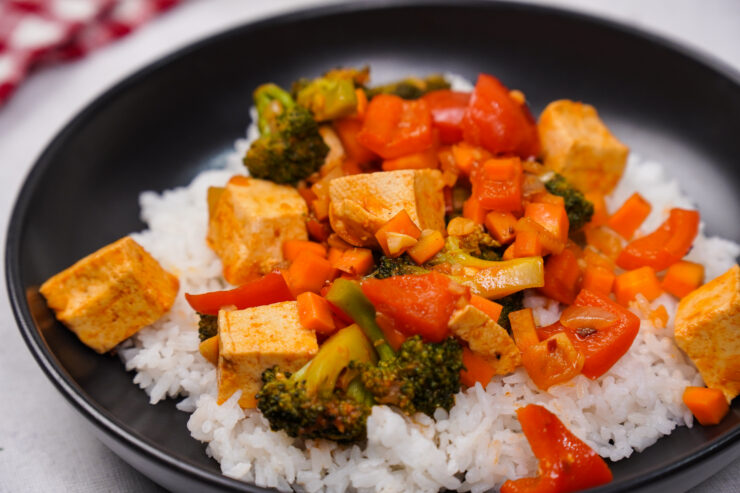
Laden with cubes of extra‑firm tofu and tender‑crisp vegetables like broccoli, carrots, and bell peppers, this Korean stir-fry is full of vibrant colors and Korean‑inspired flavors. The sauce has gochujang paste in it, which is a type of Korean red chili paste that is both sweet and spicy. Paired with sriracha, soy sauce, and rice vinegar, the sauce has so much complexity to it, leaning savory, tangy, and spicy at the same time.
Serve this Asian veggie stir fry over steamed rice to balance out the spicy flavors. Check out the full recipe if you want to try it yourself.
Szechuan Style Tofu
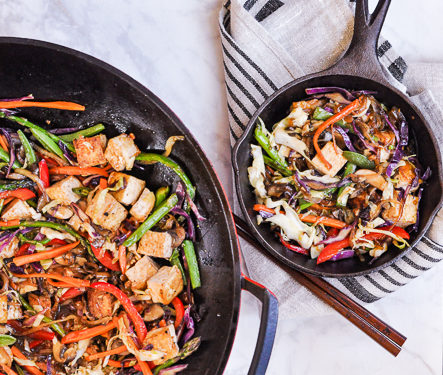
Szechuan cooking stands out for its use of Szechuan peppercorns and chilis, bringing lots of heat. This Szechuan-style tofu is inspired by dishes from China’s Szechuan region and is loaded with tofu, mushrooms, cabbage, bell peppers, carrots, and green veggies, all tossed in a flavorful sauce.
The sauce may look simple with its blend of Szechuan peppercorns, soy sauce, garlic, ginger, garlic chili paste, vinegar, sesame oil, and more, but the ingredients in it are key to showcasing the Szechuan flavors. Check out the complete recipe if you are looking to add some Szechuan‑inspired dishes to your culinary repertoire.
Stir Fries With Peanuts
Many Asian stir fry recipes and other Asian dishes use peanuts or peanut butter for a salty, nutty flavor and either a crunchy or creamy texture. These recipes show how peanuts can really elevate a veggie stir fry.
Broccoli Tofu Peanut Sauce
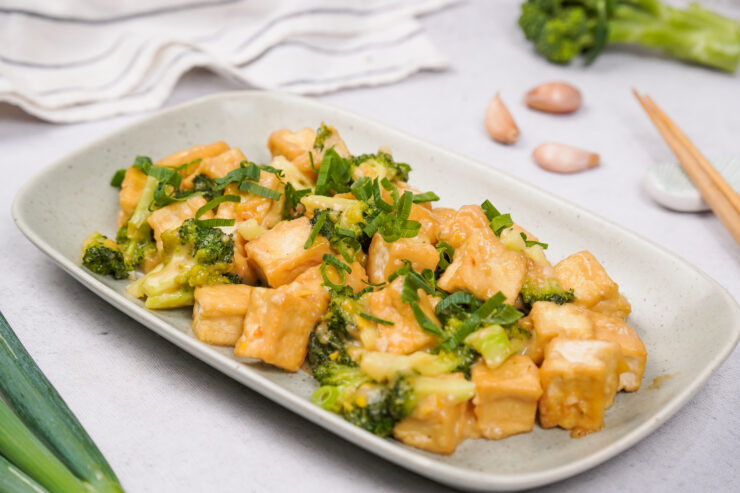
Full of chunks of tofu and crisp, bright green broccoli, this vegan vegetable stir fry recipe is also incredibly delicious with a sauce of peanut butter, soy sauce, ginger, garlic, maple syrup, and rice vinegar. The peanut butter imparts a delightful creaminess to the sauce, helping it coat the broccoli and tofu beautifully.
To make this dish, check it out here and follow the full recipe.
Tofu Peanut Lettuce Wraps
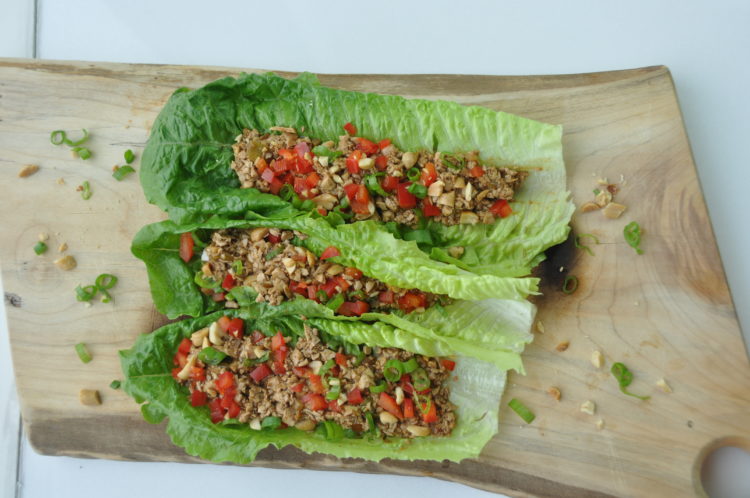
This recipe is a bit different because the stir-fried tofu mixture is served in lettuce leaves, so you can eat it with your hands. It’s a great choice if you’re gluten-free or want a lower-carb lunch or dinner during the week.
The tofu filling is full of flavor from ginger and garlic, gets a spicy kick from chili garlic sauce, and has extra color and crunch from bell peppers, water chestnuts, and peanuts. Check out the full recipe for all the details.
Black Pepper Stir Fries
These next recipes are inspired by Chinese-style black pepper stir fries. While you might usually see them with chicken or beef at takeout places, these versions use tofu instead.
Chinese Takeout-Style Black Pepper Tofu
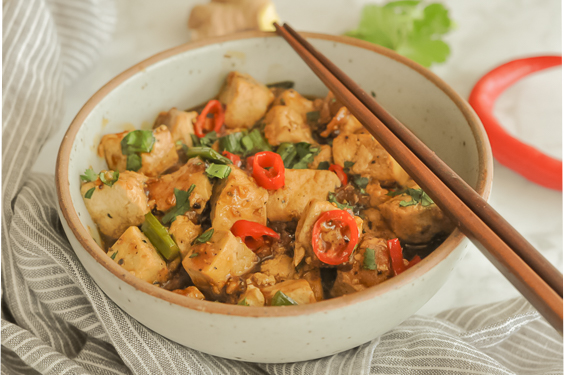
Inspired by black pepper chicken, a notable dish in Chinese cuisine, this black pepper tofu is a plant‑based alternative that is full of quality protein and heat from freshly cracked black pepper and chilis. Cooking the tofu cubes on all sides until golden gives it an even better flavor and helps prevent it from becoming soggy once the sauce and seasonings are added.
The full recipe will tell you everything you need to know about making this fiery black pepper tofu stir fry.
Tofu With Green Veggies
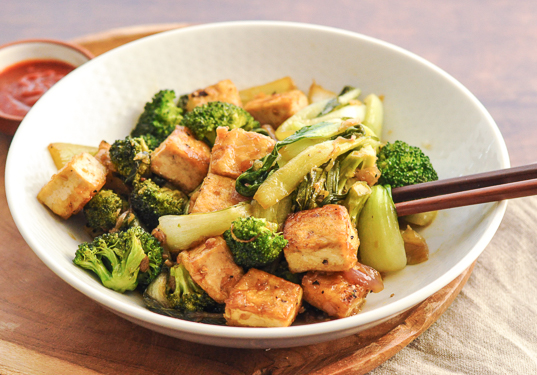
This delicious veggie stir fry recipe is full of bright green vegetables, including bok choy and broccoli, along with tofu and a salty and slightly spicy black pepper sauce. Similar to the black pepper tofu recipe, the tofu here gets cooked to a golden brown and crisp texture, which helps it hold up to the sauce.
The sauce comprises whole crushed black peppercorns, offering a hint of spice in every single bite. If you would love to make this tofu with green veggies recipe, you can check out the recipe here.
Tips, Variations, and Customizations
One of the best things about stir fries is how easy they are to customize based on your tastes and what you have at home. Here are some ways to adapt these recipes:
- Use a different sauce: If you like any of the vegetable and protein combinations in the above list but know that someone in your family may not enjoy the sauce that goes with them, you could use a different sauce instead. Store‑bought jarred stir fry sauces can work in a pinch or you could blend your own sauce with a mixture of soy sauce or tamari, your choice of sweetener (such as honey or maple syrup), aromatics (like garlic, ginger, and scallions), oils (like vegetable or sesame oil), acids (like vinegar or lime juice), and spices such as chilis and five spice powder. Making a stir-fry sauce is really as simple as making a vinaigrette; simply mix together ingredients until you like the taste and balance of the flavors.
- Add other protein: Several of the above recipes have tofu in them, which is a wonderful vegan protein source, but if you don’t enjoy tofu, you could add cooked lentils or beans to your stir fry for another plant‑based option. Alternatively, if you have any meat eaters in your home, shrimp, chicken, pork, or beef would work well in any of the stir-fries as well.
- Make them peanut‑free: Not everyone can have peanuts due to allergies, but rest assured that you can still make the tofu peanut lettuce wraps and broccoli tofu with peanut sauce if you use a substitute for the peanut‑based ingredients. In the case of peanut butter, you could easily replace it with almond butter or cashew butter, or even sunflower seed butter if you need the recipe to be entirely nut‑free. Meanwhile, for the chopped peanuts, you could add chopped almonds, cashews, or sunflower seeds.
- Add other vegetables: The sky is the limit when it comes to making stir-fries at home. If there are any veggies that you don’t love in the listed recipes, you can omit them and swap them for other ones that you prefer. Vegetables that work great in stir fries include snow peas, bell peppers, mushrooms, broccoli florets, baby corn, zucchini, carrots, spinach, bok choy, and more.
Storage, Make-Ahead, Use Cases
Store any leftover vegetarian stir fry in an airtight container in the fridge. While it’s safe to eat for a few days, it’s best to enjoy leftovers within 24 hours so the veggies don’t get soggy.
If you find that the veggies are a little less than optimal after a few days of storage, they would be great added to pasta dishes or fried rice, where the texture of the vegetables may be less noticeable. The vegetable mixtures could also be given new life by being placed on top of grain or salad bowls along with raw veggies, seeds, nuts, and your desired sauce.
To make preparation of any of the stir-fries even faster and more convenient, you could prepare sauces and chop vegetables ahead of time. Simply place them in separate containers in the fridge so that they are ready to grab when you want to get cooking.
FAQs About This Topic
Vegetable stir-fries work great with any vegetables that cook quickly over high heat. These include carrots, broccoli, snow peas, green beans, and mushrooms.
If you need a sauce that is quick to make, simply mix grated ginger with minced garlic, soy sauce, vegetable broth, a thickening agent (such as cornstarch or arrowroot), and a pinch of sweetener. This will be a fragrant and salty sauce that will thicken in the pan and coat any vegetables that you use.
The best way to prevent vegetables from becoming soggy is to cook them quickly and at high heat. First, make sure the cooking oil is hot before you add the veggies; then, add the veggies and cook them quickly until they are bright in color and tender‑crisp (don’t overcook). Finally, you add the sauce and cook the mixture for about 1 minute before mixing it well.
A wok will work the best and distribute the heat evenly, helping the vegetables cook evenly and allowing you to ensure they retain some crispness. However, if you do not have a wok, you can use a skillet or sauté pan instead.
To prevent a watery vegetable stir fry, simply make a slurry with a thickening agent (such as cornstarch or arrowroot) and add it to the stir fry to cook for a minute. This will help thicken up the sauce and any liquid that seeps out of the veggies during the cooking process.
Simply start by adding the cubes of tofu to heated oil and cooking them for 1–2 minutes, turning them so they cook evenly. This will give the tofu a crispy crust before you add your veggies and sauce.
I do not recommend freezing a stir-fry as it will negatively impact the texture of the vegetables. However, leftover veggie stir fry will last in the fridge for up to 24 hours; after that, the veggies will be very soggy.

Nutrition Disclaimer
Nutrition information is an estimate provided as a courtesy and may vary depending on ingredients used. This content is not intended as medical or dietary advice.