
Miso Bok Choy Recipe: A Simple Twist on Classic Bok Choy
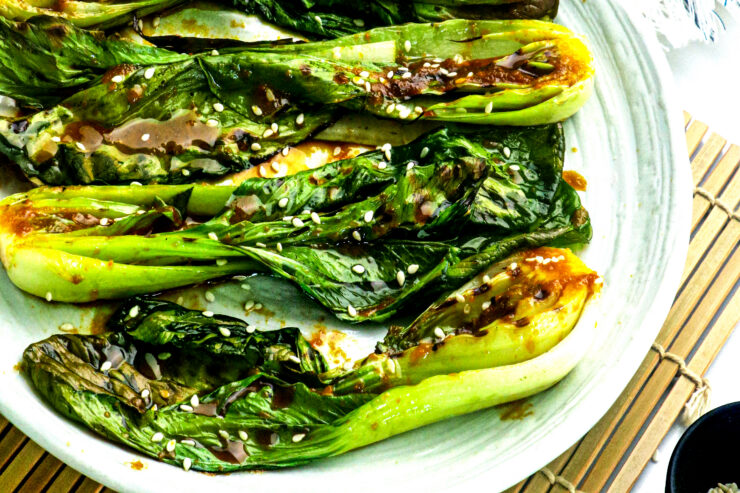
This easy miso bok choy recipe is a perfect side dish to any Asian-inspired main course. Perfectly crispy and tender, this baby bok choy is generously brushed with a sweet miso glaze. The glaze, made with Japanese miso paste, is simple yet tasty with only five ingredients that you may already have in your pantry. This vegan side dish has become so popular in my household that we include it in the regular rotation of dishes that we frequently eat! The nutty miso-glaze can be used to boost the flavor of tofu, grilled cabbage, eggplant, root vegetables…anything really! Round out this side dish with some fluffy rice or serve it on a bed of noodles.
Why You’ll Love This Recipe
What I love about this miso bok choy is that 5 to 6 ingredients and 10 minutes transforms bok choy, a bitter-tasting powerhouse green vegetable, to an amazing flavorful, comforting, crisp, and light side dish. The miso brings a deep, salty, slightly funky richness to the bok choy recipe and coats the bok choy. Meanwhile, a touch of maple syrup gives the dish a gentle sweetness that rounds out the saltiness from tamari and miso.
Bok choy itself has a subtle bitter, cabbage-like flavor and is very mild compared to kale.
It is fresh, juicy, and crunchy; the stems stay crisp and watery while the leaves soften and soak up the sauce. For more flavorful Asian-inspired dishes, consider trying my Tofu with Green Veggies, my Veggie Fried Rice, or my Chinese Takeout-Style Black Pepper Tofu Recipe, which all use colorful vegetables for added nutrients and fiber. Here are all the reasons why this is the best bok choy recipe ever:
- Minimal Chopping: All you have to do is cut the bok choy in half to get it ready to cook. Besides that, there are just a few ingredients that need to be measured out to form the delicious saucy coating.
- A Delicious Sauce: The combination of miso, maple syrup, tamari, and rice vinegar makes this sauce a little funky, sweet, salty, and tangy. The sweetness of the maple syrup naturally balances out the bitterness of the bok choy while the rice vinegar brightens up the flavors.
- Cooks in Minutes: The bok choy cooks quickly, only requiring 10 minutes to become tender and bright green in color. It can be the last thing that you make while you are finishing up your other dishes for dinner such as my Quinoa Veggie Fried Rice or my Scallion Pancakes.
Key Ingredients in This Recipe
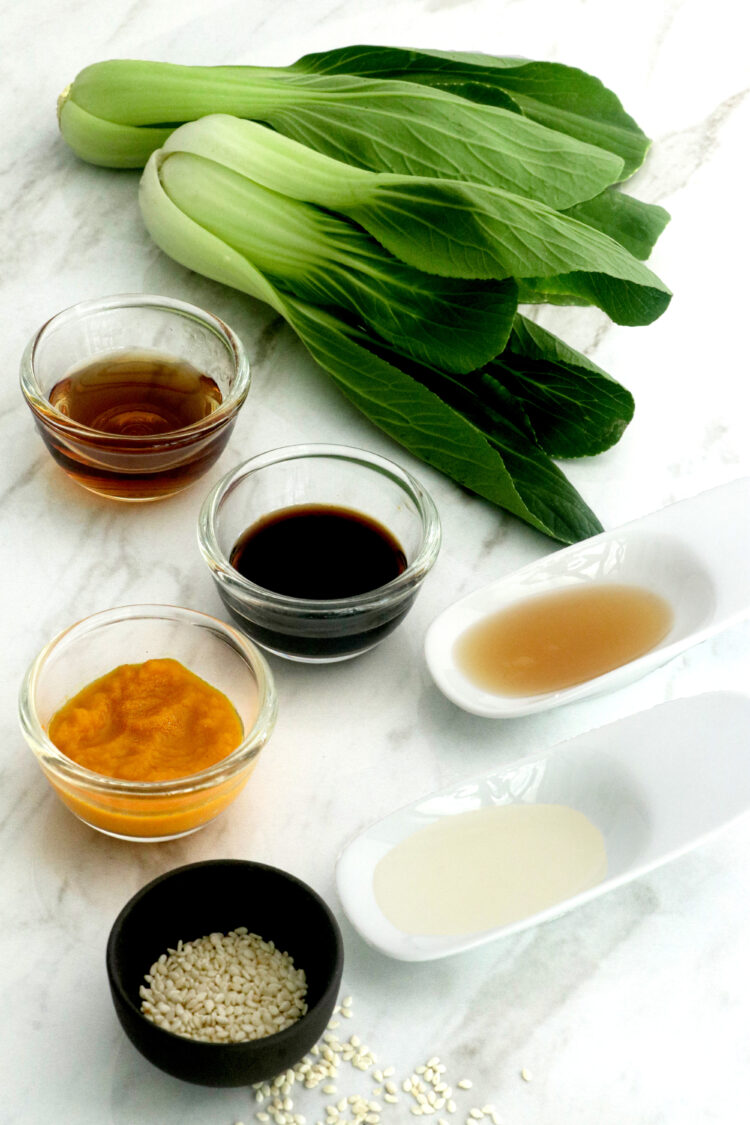
If you are looking for yellow miso paste recipes, this bok choy recipe will be a perfect place to start. It requires a minimal amount of ingredients that pack a punch. Here is everything you will need to make this funky tasting miso bok choy dish:
- baby bok choy
- yellow miso paste
- maple syrup
- tamari
- rice vinegar
- sesame oil
- sesame seeds – optional for garnish
Step-by-Step Instructions
This recipe for cooking bok choy requires only 10 minutes of prep time and 10 minutes of cooking time, making it a quick and easy vegetable side dish. Here are all of the steps to make this bok choy recipe:
- In a small bowl, stir the miso paste with the maple syrup, tamari, rice vinegar, and sesame oil to make the glaze mixture.
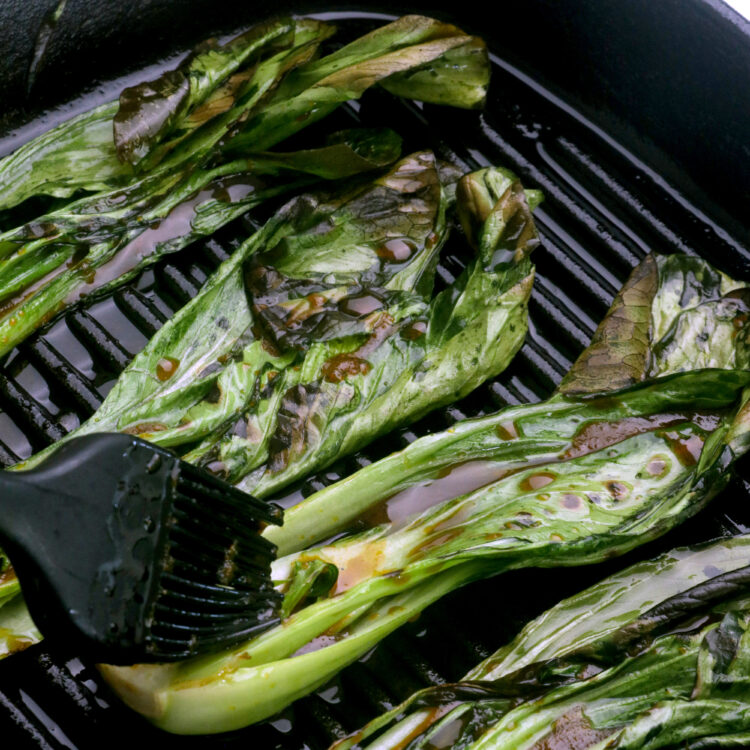
- Cut the baby bok choy in half lengthwise and wait for the pan and oil to heat up before placing them cut side down on a metal or cast-iron skillet over medium heat. Sear each side for a few minutes and then brush the bok choy with the miso glaze last to avoid the maple syrup burning on your hot pan.
- Flip to the other side and sear for another minute, then serve.
Tips for the Best Results
Despite the simplicity of this recipe with miso and bok choy, there are a few key things to keep in mind to achieve the best results. Here is what you need to know:
- Pre-heat the Pan: You want your pan and the oil to be quite hot before you add the bok choy so that the bok choy can pick up some color and cook quickly. A cast iron skillet is the best type of pan to use here as it heats evenly and retains heat very well.
- Don’t Move the Bok Choy Too Quickly: In order for the bok choy to become a nice golden color, you will want to allow it to cook on one side for a few minutes before turning it over. Once you notice that the bottoms are browning, you will know they are ready to flip so you can sear them on the other side.
- Brush Them With Glaze at the End of the Cooking Time: Since your pan will be very hot, you won’t want to add the glaze too early or else it will burn in the pan. For the most vibrant flavors, simply brush the bok choy with the glaze after it is flipped over. It will leave a glossy finish on the bok choy in addition to a delicious flavor.
Storage & Reheating
This miso bok choy recipe doesn’t make an overwhelming amount so you will be unlikely to have any left over. However, if you do, you can store the bok choy in a sealed container in the fridge where it should keep for up to 3 to 4 days. Then, you can reheat it in the microwave or in a pan on the stove when you are ready to serve them.
WHAT DOES BOK CHOY TASTE LIKE?
Bok choy, also known as pak choi (pok choi), is a staple in Chinese cuisine that has become prevalent in local grocery stores and farmers’ markets across the U.S. This leafy green vegetable, which belongs to the mustard family along with kale, broccoli, and cabbage, has a crunchy stem akin to the texture of celery. and soft, dark green leaves. These grassy-tasting leaves are usually cooked quickly over medium heat as they wilt due to their thin texture. The stalks become tender and crunchy when cooked in hot oil for a few minutes on each side.
HOW TO PREPARE BOK CHOY
Bok choy has dirt within its bundle of stalks, so it’s important to wash it well by cutting off the thick base and separating each stalk. With baby bok choy, since we grill the halves be sure to keep the end of the bulb intact (it will soften with cooking) and run the entire bundle under running water as best as you can. For cooking, it’s best to grill or sear the bok choy over medium-high heat as boiling and steaming will produce a wet and limp vegetable.
Cut the baby bok choy in half lengthwise and wait for the pan and oil to heat up before placing them cut side down on a metal or cast-iron skillet over medium heat. Sear each side for a few minutes and then brush the bok choy with the miso glaze last to avoid the maple syrup burning on your hot pan.
Store your bok choy in the crisper section of your refrigerator for up to seven days and be sure not to wash it right before cooking because it will spoil faster. Discard any wilted leaves that develop brown spots.
WHAT IS MISO AND WHAT DOES IT TASTE LIKE?
Originated in Japan, miso is a fermented soybean paste that comes in a variety of flavors — sweet, salty, earthy – and also adds a savory flavor that is now identified as umami, our fifth taste sensation. Miso is commonly fermented with koji – rice that has been inoculated with a fungus – and salt.
In this recipe, I recommend using white or yellow miso. You can also use chickpea or dark miso but be aware that it’s much saltier so you will need to reduce the quantity to taste. In contrast, white miso is going to be your mildest and sweetest-tasting miso, whereas yellow miso has a slightly salty flavor. Look for these varieties in plastic containers or bags in your grocery store near other fermented products such as tempeh and kimchi. Due to its high salt content and fermentation process, miso can last in your refrigerator for up to one year!
OTHER RECIPES THAT GO WITH MISO-GLAZED BOK CHOY
Enjoy my miso-glazed bok choy as a side dish to complement some of my tofu, stir-fry, rice, and noodle recipes:
In this miso-glazed bok choy recipe, I prefer to use baby bok choy because it’s smaller and easier to quickly sear on a hot pan. You may be wondering what the difference is between regular bok choy and baby bok choy. There is really no difference except that the baby bok choy is harvested earlier and, therefore, has smaller and sweeter leaves.
I have made bok choy on a regular pan, on a Le Creuset Cast Iron Grill Skillet, and an outdoor grill — I love the grilling marks from the Le Creuset Grill or the outdoor grill!
Miso Bok Choy Recipe: A Simple Twist on Classic Bok Choy
Ingredients
- 2 baby bok choy, (washed and sliced in half length-wise)
- Oil of choice, for brushing the grill or grill pan
Glaze Mixture
- 1 tablespoon yellow miso paste
- 1 tablespoon maple syrup
- 1 teaspoon tamari
- 1 teaspoon rice vinegar
- 1 teaspoon sesame oil
Garnish
- 1 teaspoon sesame seeds, (optional for garnish)
Instructions
- For the glaze mixture, in a small bowl, add the miso paste, maple syrup, tamari, rice vinegar, and sesame oil.
- Cut the baby bok choy in half lengthwise and wait for the pan and oil to heat up before placing them cut side down on a metal or cast-iron skillet over medium heat. Sear each side for a few minutes and then brush the bok choy with the miso glaze last to avoid the maple syrup burning on your hot pan.
- Flip to the other side and sear for another minute, then serve.
Bon appétit!
Equipment
- 1 Grill pan, or grill
Notes
- Preheat your grill pan or grill before adding the bok choy halves. It should be hot enough to color the bok choy and cook it quickly.
- Brush the bok choy with the glaze towards the end of the cooking time so that it doesn't burn.
- Don't move the bok choy too quickly as you want to give it time to brown before you turn it over.
Nutrition
FAQ
I have used both baby and regular bok choy for this recipe. I prefer baby bok choy for its sweeter taste and delicate profile. If you use regular bok choy, please increase the marinade mixture by 1.5X and the cooking time by 2 minutes.
* Slice off the very bottom (about ½ inch) where all the stalks connect and separate the stalks. Gently pull the bok choy apart into individual stems/leaves.
* Place the stalks in a large bowl of cold water and swish them around with your hands to loosen sand and grit. Let it sit for 25-30 seconds so dirt sinks to the bottom.
* Lift the bok choy out (don’t pour the water out over it or the dirt will reattach). Repeat if needed.
* Shake off excess water and pat dry the stalks using a kitchen towel or paper towel.
The cooking process goes really fast so you should make sure the pan is heated before you start cooking the bok choy. Then, once it has browned on the one side, you brush it with the glaze, cook it for a minute, and then flip it over.
I prefer the mild and sweet flavor of white and yellow miso for this recipe. The red miso has a very strong salty and bitter flavor and makes the bok choy more bitter.
Bok choy has a sharp bitter flavor. I like to add sweetness with maple and miso to cut the bitterness of the bok choy. Tamari helps to balance out the sweetness by adding salt to it.
Yes, make sure you use gluten free tamari sauce.
It is best to use a grill or a grill pan. It’s ok if you don’t have one, though, as you can also sear the bok choy in a regular pan. The key is that you need to make sure that the pan / grill is hot so that the boy choy does not stick to the pan and cooks quickly. You will know that the pan is ready when you can feel the heat emanating from the pan as you wave a hand over it, but can’t wave it for longer than 5 seconds.


Janie
Very flavorful and quick to make! I’ll be making this again soon!
SueB
So quick and easy and delicious. Loved it. Added some red chili flakes for some heat.
Brian
that was very delicious, thank you Shikha. The bok choy was was perfect when fried then lightly seasoned with miso. It’s nice to have a whole bag of both now.
Brian
that was very delicious, thank you Shikha. The bok choy was perfect when fried then lightly seasoned with miso. It’s nice to have a whole bag of both now.
Kari
Truthfully, I’ve never been a bok choy fan. I never know how to cook it so it’s not “meh”. This miso glazed bok choy changes everything. SO good and so easy. Thank you!
Veggiecurean Veggiecurean
Glad you enjoyed. Cooking bok choy in miso makes it very flavorful.