
Mint Cilantro Chutney (Indian Green Chutney)
This simple and easy mint cilantro chutney recipe only takes 10–15 minutes to make. Chutney is the perfect Indian spread for sandwiches and chaat, and it’s vegan!
The smell of mint and cilantro in my kitchen is one of my favorite things in the summer when making a big batch of this bright green Indian chutney.
Loaded with spicy jalapeños, mint, cilantro (also known as coriander), lemon juice, and garlic, it might just be my “everything” sauce! I mean, literally everything — if you’re familiar with popular Indian dishes, you’ve probably seen chutney with naan, chapati, parathas, dosas, and chaat, an umbrella term for savory Indian snacks.
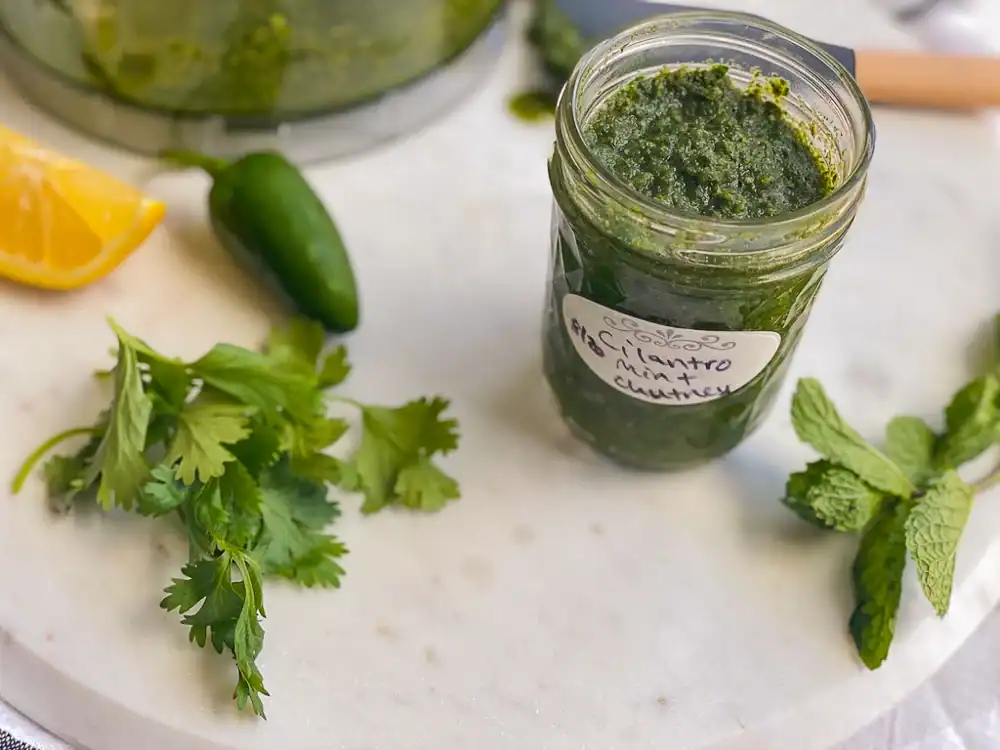
Most chaats typically feature a fried component such as samosas or pakoras, boiled or raw vegetables, and a combination of chutneys that provide immense flavor and freshness to an inherently starchy dish. Try this delicious chutney for yourself and pair it with my deconstructed samosa recipe!
Traditional green chutney for chaat is usually made with seasonal ingredients such as raw mangoes and mint and is meant to preserve the mangoes for consumption during the offseason, but my chutney recipe is made with fresh ingredients that you can find in any season and it tastes just like traditional chutney!
This green chutney is the star ingredient in another Indian street food classic, the green chutney sandwich, perhaps better known as the Bombay chutney sandwich. These satisfying sandwiches are simply made with slices of soft white bread, thinly sliced vegetables, and a whole lot of mint cilantro chutney spread generously on each slice.

Add this simple but flavorful recipe to your repertoire of sauces and you’ll be reaching for it every time you need to elevate a dish. The best part — besides the taste! — is that this chutney is super freezer-friendly, so you can enjoy it for months to come.
Why You Will Love This Mint Cilantro Chutney Recipe
- It’s so simple. You can have the chutney ready to eat in 10–15 minutes, using just one appliance.
- It freezes for four to five months. Make a large batch and you’ll have an almost endless supply to use for chaat, salads, burgers, and rice dishes. Or for single-use servings, freeze it in a silicone ice cube tray!
- It’s naturally vegan and gluten-free. If you keep a plant-based diet like me, you’re all set.
- It’s made from ingredients available year-round. Unlike the traditional seasonal raw mango version, you can enjoy it in the peak of summer and all the way into those colder winter months.
What is Chutney and What Does it Taste Like?
Chutney originated over 2,000 years ago on the Indian subcontinent in the form of a sauce or paste made from fresh ingredients and was created to extend the shelf life of produce, according to DesiBlitz.
Chutney was eventually adopted by the Roman and British empires and then further made popular by the American and Australian colonies, where it flourished as a commercial product sold in jars.
Today, you can find creative chutney variations made from coconut, mint, peanut, tomato, mango, tamarind, and a wide variety of spices, and they can be sweet or hot, tangy, smooth, or somewhat chunky.
If you’ve ever been to an Indian buffet, you’ll find many other varieties of chutney appearing as sauces, dips, and side dishes.
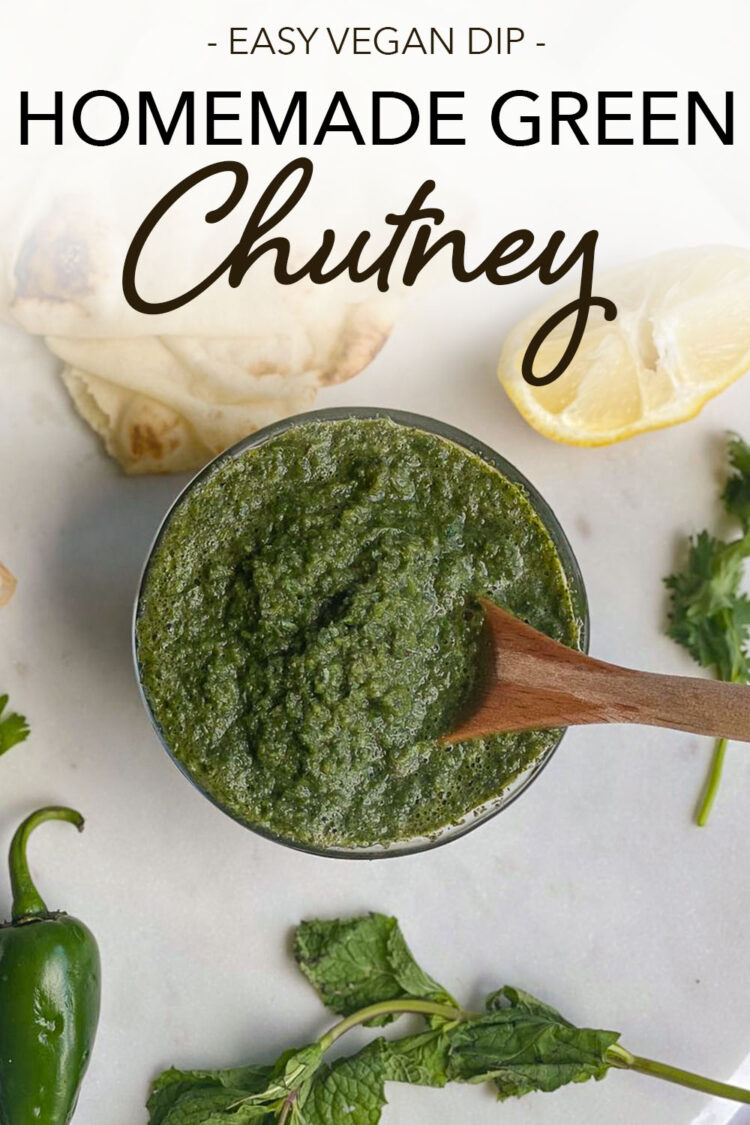
Green chutney is a quintessential accompaniment to so many dishes in an Indian household. It is primarily made with cilantro (also known as coriander or dhaniya) and mint (also known as pudina), which are both believed to aid in digestion.
It is then paired with chilis, acid, and garlic, resulting in a cool and refreshing condiment ideal for savory dishes.
Another popular chutney worth mentioning is called tamarind (imli) chutney, which is the perfect combination of sweet and tart, giving a ton of balance and flavor to savory appetizers.
It’s usually made with jaggery, unrefined sugar that is sold in blocks, black salt (a sulfurous-smelling salt), tamarind paste, and spices such as ground ginger, fennel, cumin, and sometimes garam masala.
Mint cilantro chutney and tamarind chutney are usually served together and are the most popular chutneys out there.
Ingredients in Mint Cilantro Chutney
- Jalapeños: If you prefer a spicier chutney, feel free to add another ½ of jalapeño in addition to the 2 listed in this recipe.
- Fresh Mint & Cilantro Leaves: Try to remove as much of the stems as possible and use only the leaves, as blending stems can cause the sauce to have a bitter taste. Rinse these greens well to remove all the dirt.
- Lemon Juice: Adjust for a brighter flavor; adding lemon also slows down discoloration of the green pigment in mint and coriander, keeping it a lighter green color.
- Garlic: Garlic is optional but recommended for a sharp kick.
- Water: I use ¼ cup water total in this recipe to get it going in the blender, but I recommend starting with 2 tablespoons and increasing the amount slowly until you get your preferred consistency. It should be a paste and not be runny.
Easy Tips For Making Mint Cilantro Chutney
Troubleshooting
- If you find that the chutney has become too spicy from adding extra jalapeños, add 1/3 cup silken tofu or vegan unsweetened yogurt (I like coconut yogurt for this). These add-ins will also make the sauce creamier.
- For a stronger mint flavor, leave the cilantro out.
- To give the chutney hints of coconut flavor, add up to 1 tablespoon of shredded coconut.
- For a smooth consistency when blending, you may need to stop the blender or food processor a few times and scrape down the sides to ensure a smooth result. Be sure to leave a little bit of texture in the chutney.
- If the chutney tastes bitter, add a pinch of sugar or coconut sugar.


How To Tell When It Is the Right Consistency
The consistency of chutney is similar to pesto. If you dip a spoon into chutney, it should coat the back of the spoon and run off slowly.
If the chutney is too thin, here is what you can do:
- Grind some makhana (fox nuts) and add them to the chutney, mixing well. Makhanas are bland and will not change the taste of the chutney
- Blend in another handful of cilantro and mint.
- Add some breadcrumbs and blend well.
- Add ½ a tablespoon roasted unsalted peanuts and blend well. This will make the chutney a bit nuttier in taste.
- Add ½ a tablespoon of cornflour.
A Note on the Mint to Cilantro Ratio
The 1:1 ratio that I use for mint and cilantro is not standard for traditional mint and cilantro chutney recipes. However, it’s something that our family likes! We find the flavor much more balanced for our palate.
Most people prefer more mint, but when we do that, we find that the mint taste is too strong.
How to Store and Freeze Mint Cilantro Chutney
Eat some, freeze some! During the summer when mint is growing wild in my garden, I like to make large batches of this chutney, store it in small glass jars, label the jars with the date, and freeze them for four to five months.
Be sure not to fill the jars up to the top, leaving 1-2 inches to allow it to expand in the freezer.
Later in the year, just do a quick thaw before you’re ready to add this to your meal and you’re all set — for single-use servings, fill up a silicone ice cube tray and remove individual cubes when needed, letting them thaw in the refrigerator on a plate or in another container. The chutney will last for up to five days, refrigerated, in a jar, or tightly covered.
Ways To Use This Mint Cilantro Chutney
- Fried Indian snacks: We all know the classic Indian pairing of mint chutney with fried Indian snacks such as samosas, pakoras, aloo tikki, and vegetable cutlets. It goes really well with my deconstructed samosas recipe, which is a healthier version that isn’t deep-fried!
- Serve it with biryani or another rice dish: I often prepare it alongside my paneer biryani recipe and also my poha recipe, which is when flattened rice is fried with turmeric, curry leaves and peanuts. Another of my go-to pairings is this roasted vegetable rice curry bowl.
- Use it in burgers: Instead of your classic burger condiments, the chutney is really delicious with vegan burgers. Try it on my sweet potato bean burgers recipe or chickpea pancakes recipe.
- Add it to a salad dressing: I whisk it with olive oil and balsamic vinegar before stirring it into my salads.
- Mix it with roasted chickpeas: And if I am in the mood for some chaat, I mix some chutney with my za’atar roasted chickpeas recipe. It hits the spot!

Mint Cilantro Chutney (Indian Green Chutney)
Ingredients
- 2 green jalapeños, (seeds and pits removed, keep seeds for more heat, if desired)
- 1/2 cup fresh mint leaves, (packed)
- 1/2 cup cilantro leaves, (packed)
- 3 teaspoons lemon juice, (adjust to taste)
- 1 clove garlic, (small, optional)
- 1/4 cup water, (start with less and keep adding to your preferred consistency)
- Salt, (to taste)
Instructions
- In the cup of a food processor, add the jalapeños, mint leaves, cilantro leaves, lemon juice, garlic, water, and salt, and blend the chutney until smooth.
- Refrigerate in a small airtight container or Mason jar for up to 5 days, or freeze for up to 4-5 months then thaw and consume.
Bon appétit!
Nutrition
FAQs
Mint cilantro chutney lasts five days in the refrigerator. If you want it to last even longer, freeze it. It will last four to five months in the freezer.
Absolutely. Green chutney can be frozen and enjoyed for up to four to five months later. The best way to freeze mint cilantro chutney is in a silicone ice cube tray, as each cube can be used for a single serving.
The stems are what make your mint cilantro chutney taste bitter. To prevent this, remove the stems and only blend the leaves. It also helps to rinse all of the greens well to remove any dirt. If your chutney tastes bitter, add a pinch of sugar or coconut sugar.
Green chutney darkens due to a process called oxidation. Adding lemon juice to the chutney recipe will slow this process and give you a brighter, lighter chutney.
Yes, mint cilantro chutney is naturally vegan. Make sure to avoid mint cilantro chutney recipe variations with dairy yogurt; this can be substituted with coconut yogurt.
Tamarind chutney is sweet and tart. It’s traditionally made with jaggery, black salt (a sulfurous-smelling salt), tamarind paste, and spices such as ground ginger, fennel, cumin, and occasionally garam masala.
Mint cilantro chutney, on the other hand, is primarily made with cilantro and mint, and then paired with chilis, acid, and garlic, resulting in a cool and refreshing condiment that’s ideal for savory dishes.

Nutrition Disclaimer
Nutrition information is an estimate provided as a courtesy and may vary depending on ingredients used. This content is not intended as medical or dietary advice.


Ela Morghan
So good. And being able to freeze it a good tip.
Veggiecurean Veggiecurean
Enjoy!